
200-301 · Question #1396
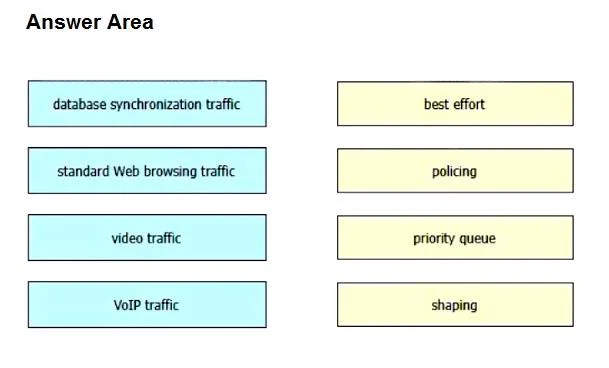
Drag and Drop Question Drag and drop the traffic types from the left onto the QoS delivery mechanisms on the right. Answer:
The correct answer is standard Web browsing traffic; video traffic; VoIP traffic; database synchronization traffic. The correct arrangement maps traffic types to QoS delivery mechanisms based on their sensitivity and priority needs. Standard Web browsing uses Best Effort (no QoS guarantees needed), video traffic uses Differentiated Services (DiffServ) for managed bandwidth and delay bounds…
Question
Exhibits
Answer Area
Drag items
Correct arrangement
- standard Web browsing traffic
- video traffic
- VoIP traffic
- database synchronization traffic
Explanation
The correct arrangement maps traffic types to QoS delivery mechanisms based on their sensitivity and priority needs. Standard Web browsing uses Best Effort (no QoS guarantees needed), video traffic uses Differentiated Services (DiffServ) for managed bandwidth and delay bounds, VoIP uses Expedited Forwarding/strict priority queuing due to its extreme sensitivity to delay and jitter, and database synchronization uses Assured Forwarding or controlled load since it requires reliable delivery but can tolerate some delay. Each traffic type's characteristics - latency sensitivity, bandwidth requirements, and loss tolerance - dictate which QoS mechanism is appropriate.
Topics
Community Discussion
No community discussion yet for this question.