
200-301 · Question #1305
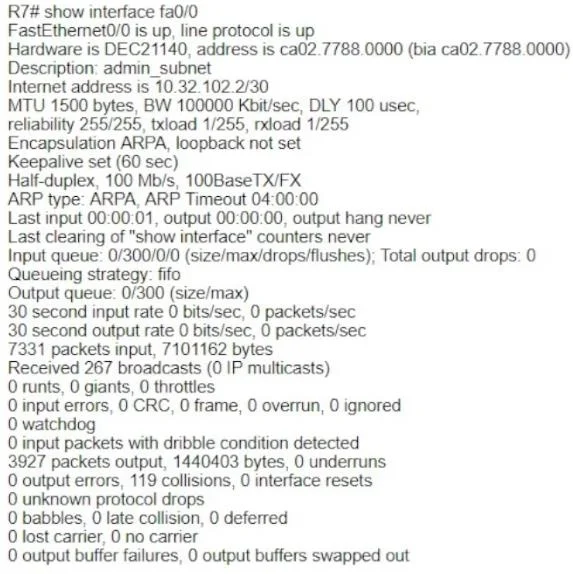
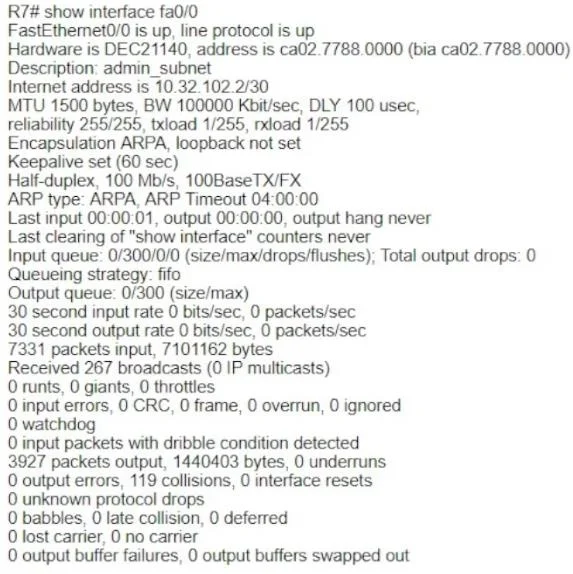
Which interface condition is occurring in this output?
The correct answer is C. duplex mismatch. Although the exhibit is missing, the correct answer suggests that the interface output likely displays symptoms consistent with a duplex mismatch, such as a high count of late collisions, input errors, or CRC errors. A duplex mismatch occurs when one side of a link operates in…
Question
Which interface condition is occurring in this output?
Exhibits
Options
- Acollisions
- Bbroadcast storm
- Cduplex mismatch
- Dqueueing
How the community answered
(63 responses)- A6% (4)
- B17% (11)
- C73% (46)
- D3% (2)
Why each option
Although the exhibit is missing, the correct answer suggests that the interface output likely displays symptoms consistent with a duplex mismatch, such as a high count of late collisions, input errors, or CRC errors. A duplex mismatch occurs when one side of a link operates in full-duplex mode while the other operates in half-duplex.
While collisions occur in half-duplex environments, a high number of *late* collisions specifically points to a duplex mismatch rather than just general collisions; other error types like CRC errors are also strong indicators of mismatch.
A broadcast storm primarily shows extremely high broadcast packet rates, often causing network-wide congestion, but isn't the primary symptom of a physical link duplex mismatch.
A duplex mismatch occurs when two connected devices operate at different duplex settings (e.g., one full-duplex, one half-duplex). This condition typically manifests in `show interface` output as a significant increase in late collisions (if local is half-duplex and remote is full-duplex) or high numbers of input errors, CRC errors, and giant frames (if local is full-duplex and remote is half-duplex), resulting in severe performance degradation and retransmissions.
Queueing indicates that packets are waiting to be processed or transmitted due to congestion or rate limits, which can be a symptom of a problem, but doesn't specifically identify a duplex mismatch as the root cause.
Concept tested: Troubleshooting network interface issues (duplex mismatch)
Source: https://www.cisco.com/c/en/us/support/docs/switches/catalyst-6500-series-switches/10570-41.html
Topics
Community Discussion
No community discussion yet for this question.