
200-301 · Question #1006
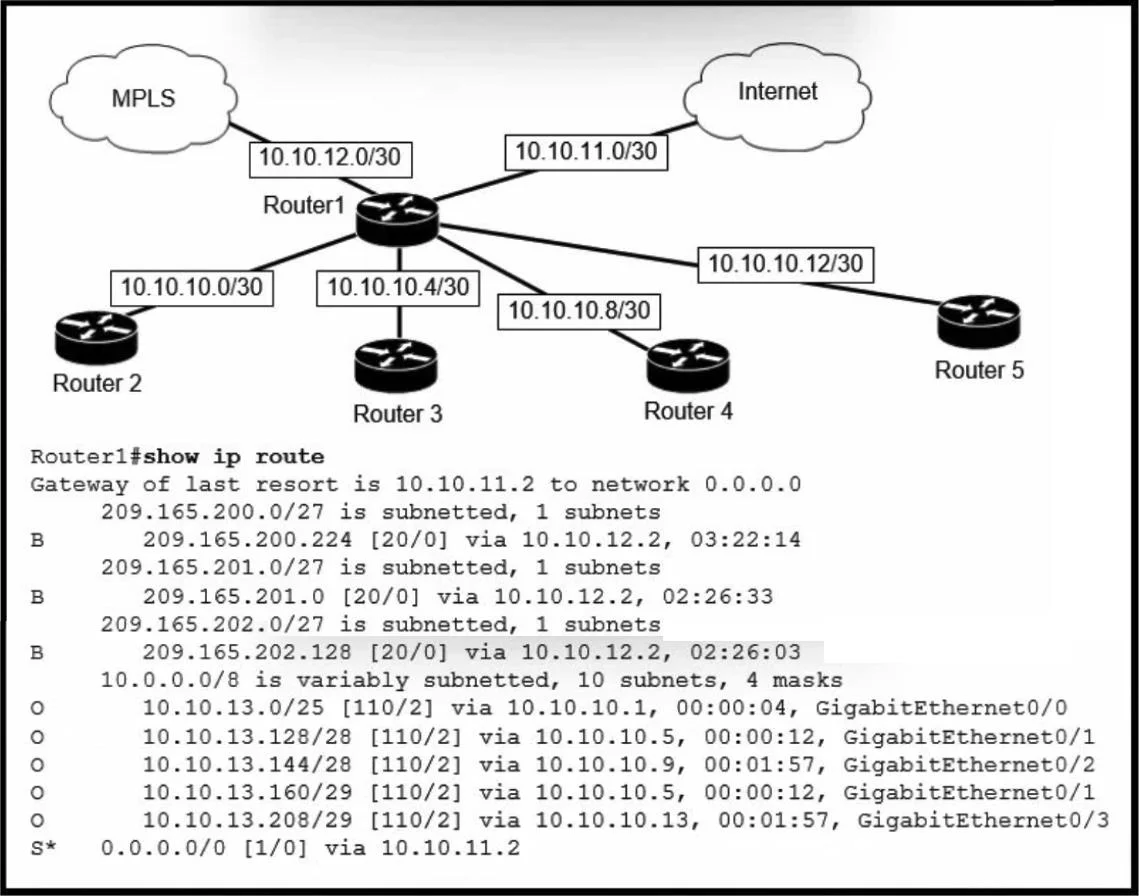
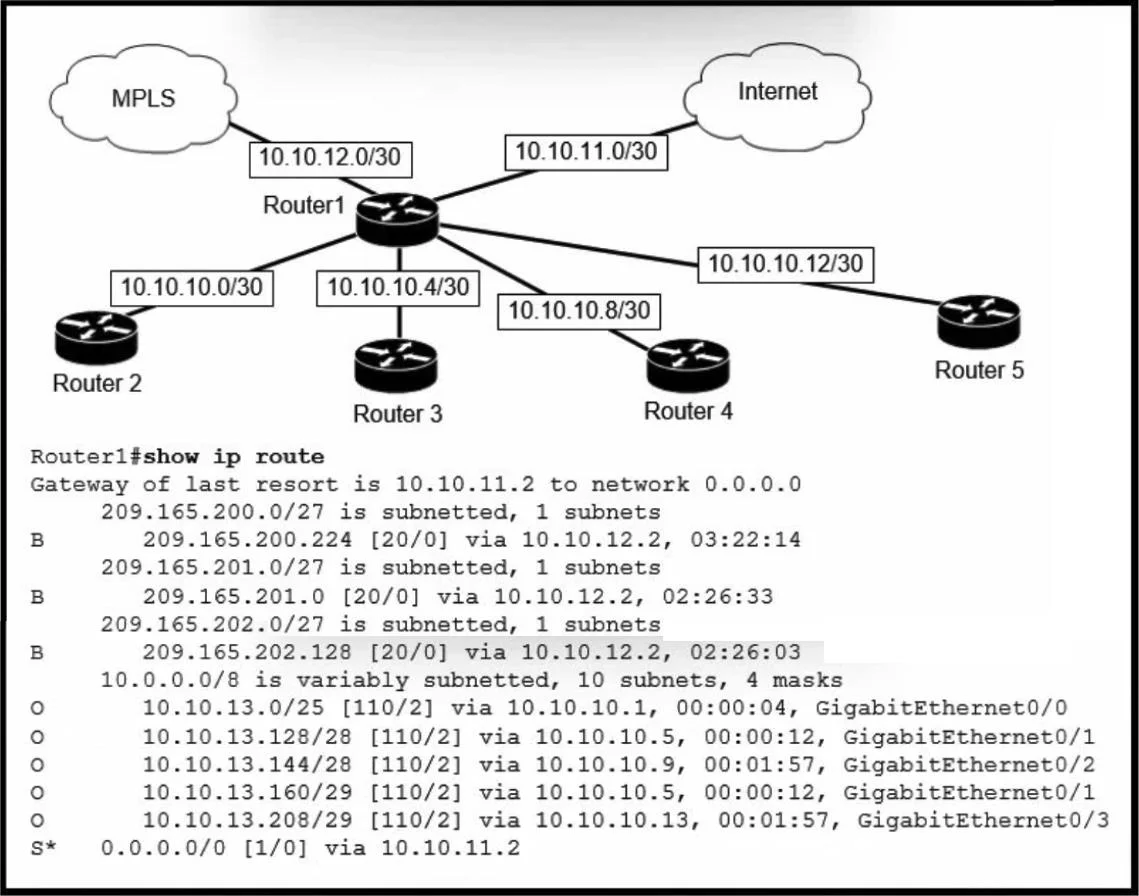
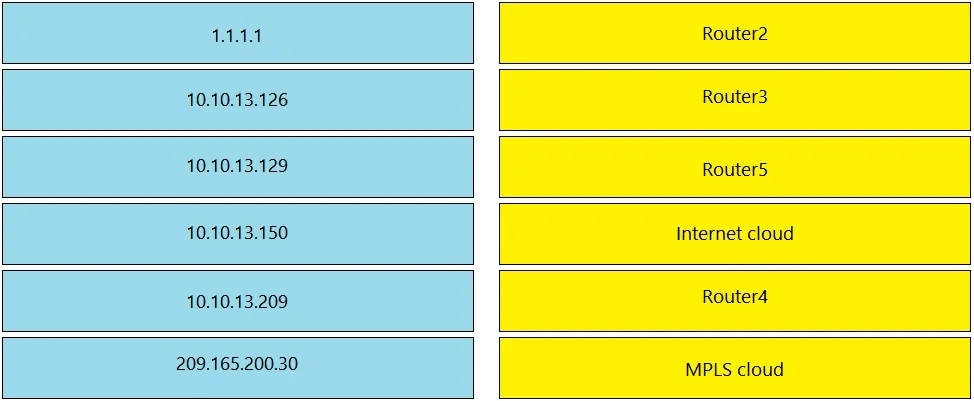
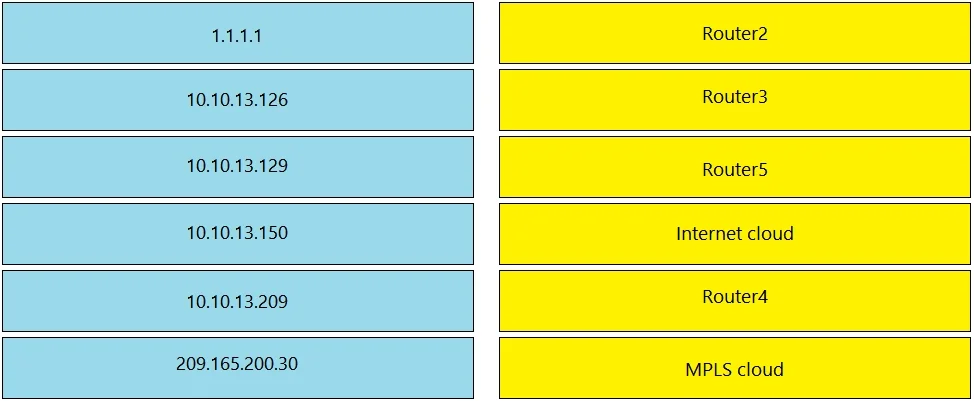
Drag and Drop Question Refer to the exhibit. Drag and drop the destination IPs from the left into the paths to reach those destinations on the right. Answer:
The correct answer is 10.10.13.126; 10.10.13.129; 10.10.13.209; 1.1.1.1; 10.10.13.150; 209.165.200.30. Important Caveat The question says "Refer to the exhibit" - without seeing the actual routing table/topology diagram, I cannot give you the exact technical reason for each placement. However, based on the IP addresses and the correct arrangement, I can reconstruct the likely…
Question
Exhibits
Answer Area
Drag items
Correct arrangement
- 10.10.13.126
- 10.10.13.129
- 10.10.13.209
- 1.1.1.1
- 10.10.13.150
- 209.165.200.30
Explanation
Important Caveat
The question says "Refer to the exhibit" - without seeing the actual routing table/topology diagram, I cannot give you the exact technical reason for each placement. However, based on the IP addresses and the correct arrangement, I can reconstruct the likely scenario with high confidence. This appears to be a Cisco routing table / longest-prefix-match question (CCNA/CCNP level).
Background Concept
Routers use longest prefix match (LPM): when multiple routes could match a destination IP, the router picks the route with the most specific (longest) subnet mask. The "paths" on the right are almost certainly different routes in a routing table, each covering a different subnet.
Likely Routing Table (Inferred from the IPs)
| Path # | Route (Subnet) | Range | Notes |
|---|---|---|---|
| 1 | 10.10.13.0/25 | .0 - .127 | |
| 2 | 10.10.13.128/30 | .128 - .131 | Very specific |
| 3 | 10.10.13.192/27 or /28 | .192 - .223+ | |
| 4 | 0.0.0.0/0 | All (default) | Default route |
| 5 | 10.10.13.128/26 | .128 - .191 | Less specific than /30 |
| 6 | 209.165.200.0/27 | .0 - .30 |
Item-by-Item Explanation
1. 10.10.13.126 -> Path 1
.126is the last usable host in a/25subnet (10.10.13.0/25, range.1-.126).- This is a classic subnetting tell -
.126as the last host before the broadcast (.127) clearly places it in the first half of the10.10.13.0/24block. - Common mistake: Confusing
.126with.127(the broadcast address, which is unreachable).
2. 10.10.13.129 -> Path 2
.129falls in the second half (10.10.13.128+), and specifically matches a very narrow subnet like10.10.13.128/30(hosts:.129and.130).- LPM picks this more-specific route over Path 5 (
10.10.13.128/26), even though both match. - Common mistake: Students often pick the broader
/26route - LPM always wins with the longer mask.
3. 10.10.13.209 -> Path 3
.209falls in the upper range of10.10.13.192/27(hosts.193-.222) or a similar block like/28.- It does not match the narrower
/30in Path 2 or the/26in Path 5. - Common mistake: Assuming all
10.10.13.128-255addresses go to the same path.
4. 1.1.1.1 -> Path 4 (Default Route)
1.1.1.1is a public IP with no specific route entry in this routing table.- It matches only the default route (
0.0.0.0/0), which is the catch-all for any destination not explicitly listed. - Path 4 being the default route is confirmed by
209.165.200.30having its own specific route (Path 6), so the default only catches truly unknown destinations like1.1.1.1. - Common mistake: Thinking the default route is used for any non-private IP - it's only used when no more-specific match exists.
5. 10.10.13.150 -> Path 5
.150falls in10.10.13.128/26(hosts.129-.190), but not in the narrower10.10.13.128/30.- Since
.150doesn't match the/30(which only covers.128-.131), the next best match is the/26. - Common mistake: This is where the difference between Path 2 and Path 5 trips students up -
.129and.150are in the same /26 but only.129is also in the more specific /30.
6. 209.165.200.30 -> Path 6
209.165.200.30is a public IP in the209.165.200.0/27range (Cisco's classic lab range, hosts.1-.30)..30is the last usable host in a/27(broadcast =.31), making it highly recognizable on Cisco exams.- This has a specific route in the table, so it does NOT go to the default route (Path 4) even though it's a public IP.
- Common mistake: Sending it to the default route - always check for a specific match first.
Key Takeaways
- LPM is everything - the more specific the subnet mask, the higher the priority.
- Know your subnet boundaries -
.126/.127,.128/.129,.191,.192,.222/.223are all boundary markers that determine path assignment. - Default route is last resort - only used when zero specific routes match.
209.165.200.xis Cisco's standard lab public range - expect it to have a specific route, not default.
Topics
Community Discussion
No community discussion yet for this question.