
200-201 · Question #365
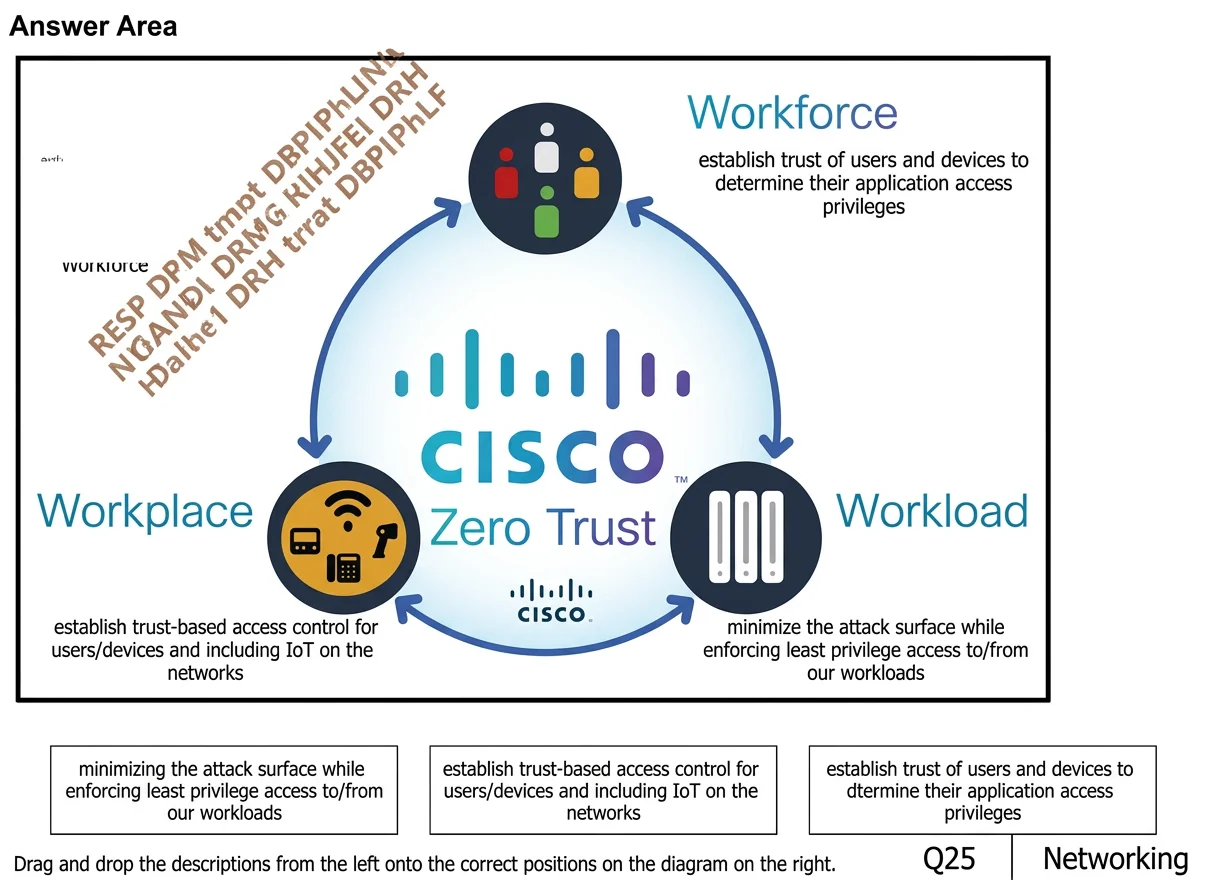
Drag and Drop Question Cisco's Zero Trust Architecture simplifies the Zero Trust journey into three critical areas. Drag the definitions onto the graphic to describe Zero Trust from the Cisco…
Mismatch Alert The question stem and the answer key do not match. This appears to be two different questions merged together. --- What the Answer Key Actually Describes The mappings (A-G) describe the fields of a network connection/flow record - not Zero Trust architecture…
Question
Drag and Drop Question Cisco's Zero Trust Architecture simplifies the Zero Trust journey into three critical areas. Drag the definitions onto the graphic to describe Zero Trust from the Cisco perspective. Answer:
Exhibit
Options
- A10.0.2.15
- B50588
- C443
- D192.124.249.9
- ETCP
- FInternet Protocol v4
- GTLS v1.2
Explanation
Mismatch Alert
The question stem and the answer key do not match. This appears to be two different questions merged together.
What the Answer Key Actually Describes
The mappings (A-G) describe the fields of a network connection/flow record - not Zero Trust architecture. Here's what each item represents:
| Label | Value | Technical Reason |
|---|---|---|
| A | 10.0.2.15 | Source IP address - a private RFC 1918 address, indicating the initiating host on a local network |
| B | 50588 | Source (ephemeral) port - a high-numbered, dynamically assigned client port (range 49152-65535) |
| C | 443 | Destination port - the well-known port for HTTPS/TLS traffic |
| D | 192.124.249.9 | Destination IP address - a public IP, the remote server being contacted |
| E | TCP | Transport layer protocol - TCP is required for reliable, ordered delivery; used by HTTPS |
| F | Internet Protocol v4 | Network layer protocol - IPv4 encapsulates the TCP segment |
| G | TLS v1.2 | Application-layer security protocol - negotiated over TCP:443 to encrypt the HTTPS session |
This describes a single HTTPS session: a private client (10.0.2.15:50588) connecting to a public server (192.124.249.9:443) over TCP/IPv4 with TLS 1.2.
The Actual Cisco Zero Trust Three Areas
The question stem is about Cisco's Zero Trust framework. Cisco's three pillars are:
- Workforce - Secure access for users and devices (who is connecting)
- Workloads - Secure communications across apps/cloud environments (what is running)
- Workplace - Secure access for all network connections (where the access originates)
What Likely Happened
This looks like a copy-paste error - the answer key from a packet analysis/Wireshark question was attached to the Zero Trust question stem. You should verify you have the correct answer sheet for this specific question.
Topics
Community Discussion
No community discussion yet for this question.