
1Z0-058 · Question #17
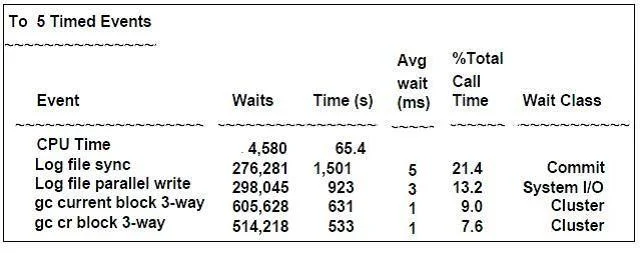
Examine the following details from the AWR report for your three-instance RAC database: Which inferences is correct?
The correct answer is B. Global cache access is optimal without any significant delays. Analyzing Cache Fusion Transfer Impact Using GCS Statistics This section describes how to monitor GCS performance by identifying objects read and modified frequently and the service times imposed by the remote access. Waiting for blocks to arrive may constitute a significant…
Question
Examine the following details from the AWR report for your three-instance RAC database:
Which inferences is correct?
Exhibit
Options
- AThere are a large number of requests for cr blocks or current blocks currently in progress.
- BGlobal cache access is optimal without any significant delays.
- CThe log file sync waits are clue to cluster interconnect latency.
- DTo determine the frequency of two-way block requests you must examine other events In the
How the community answered
(41 responses)- A10% (4)
- B83% (34)
- C5% (2)
- D2% (1)
Explanation
Analyzing Cache Fusion Transfer Impact Using GCS Statistics This section describes how to monitor GCS performance by identifying objects read and modified frequently and the service times imposed by the remote access. Waiting for blocks to arrive may constitute a significant portion of the response time, in the same way that reading from disk could increase the block access delays, only that cache fusion transfers in most cases are faster than disk access The following wait events indicate that the remotely cached blocks were shipped to the local instance without having been busy, pinned or requiring a log flush: gc current block 2-way gc current block 3-way gc cr block 2-way gc cr block 3-way The object statistics for gc current blocks received and gc cr blocks received enable quick identification of the indexes and tables which are shared by the active instances. As mentioned earlier, creating an ADDM analysis will, in most cases, point you to the SQL statements and database objects that could be impacted by interinstance contention. Any increases in the average wait times for the events mentioned in the preceding list could be caused by the following occurrences: High load: CPU shortages, long run queues, scheduling delays Misconfiguration: using public instead of private interconnect for message and block traffic If the average wait times are acceptable and no interconnect or load issues can be diagnosed, then the accumulated time waited can usually be attributed to a few SQL statements which need to be tuned to minimize the number of blocks accessed. Oracle® Real Application Clusters Administration and Deployment Guide 11g Release 2 (11.2)
Topics
Community Discussion
No community discussion yet for this question.