
XK0-004 · Question #81
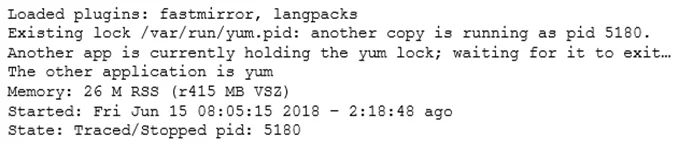
A junior Linux administrator is installing patches using YUM. The administrator issues the following command: yum list installed The output of the command is as follows: Given this scenario and the…
The correct answer is B. killall yum. How to use killall command in Linux The basic structure of killall command is killall [process name] where process name will be the name of the process already running in your system and you want to terminate.
Question
A junior Linux administrator is installing patches using YUM. The administrator issues the following command:
yum list installed The output of the command is as follows:
Given this scenario and the output, which of the following should the administrator do to address this issue?
Exhibit
Options
- Arenice -n 9 -p 5180
- Bkillall yum
- Cps -ef | grep yum
- Dtop | grep yum
How the community answered
(45 responses)- A2% (1)
- B71% (32)
- C9% (4)
- D18% (8)
Explanation
How to use killall command in Linux The basic structure of killall command is killall [process name] where process name will be the name of the process already running in your system and you want to terminate.
Topics
Community Discussion
No community discussion yet for this question.