
XK0-004 · Question #5
A Linux systems administrator needs to set permissions on an application with the following parameters: - The owner of the application should be able to read, write, and execute the application…
The correct answer is C. chmod 750 <application name>. This question tests the ability to translate human-readable permission requirements into octal notation for the chmod command.
Question
A Linux systems administrator needs to set permissions on an application with the following parameters:
- The owner of the application should be able to read, write, and
execute the application.
- Members of the group should be able to read and execute the
application.
- Everyone else should not have access to the application.
Which of the following commands would BEST accomplish these tasks?
Exhibit
Options
- Achmod 710 <application name>
- Bchmod 730 <application name>
- Cchmod 750 <application name>
- Dchmod 760 <application name>
How the community answered
(34 responses)- A3% (1)
- C91% (31)
- D6% (2)
Why each option
This question tests the ability to translate human-readable permission requirements into octal notation for the chmod command.
chmod 710 grants the owner full access and execute-only to the group (1), omitting group read permission which is required.
chmod 730 grants the owner full access but gives the group write and execute (3) without read, which does not match the requirement.
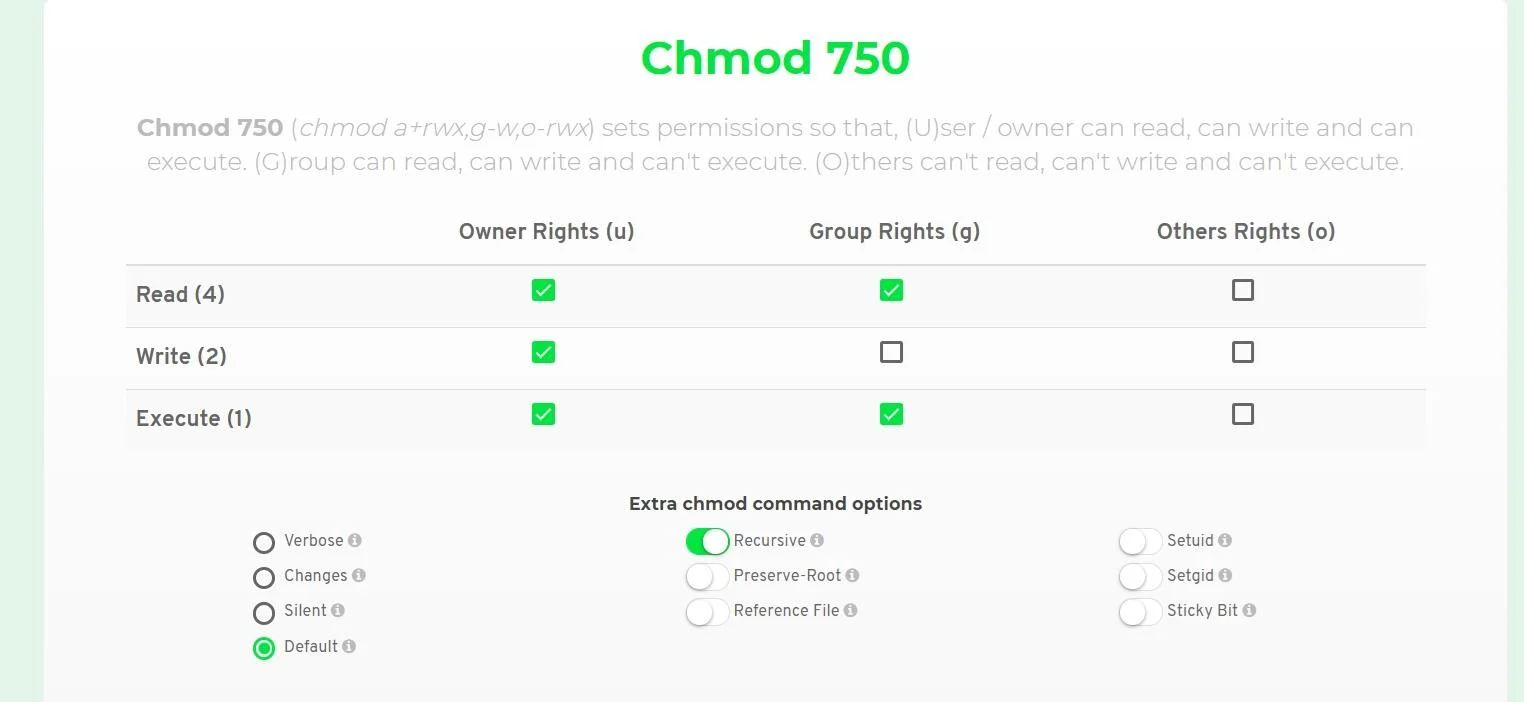
Octal 750 breaks down as: owner = 7 (read 4 + write 2 + execute 1), group = 5 (read 4 + execute 1), others = 0 (no permissions). This exactly satisfies all three stated requirements - full owner access, read/execute for group, and no access for others.
chmod 760 grants the owner full access and the group read/write (6) without execute, failing to meet the group execute requirement.
Concept tested: Linux octal chmod permission notation
Source: https://man7.org/linux/man-pages/man1/chmod.1.html
Topics
Community Discussion
No community discussion yet for this question.