
XK0-004 · Question #440
An administrator is reviewing web application logs and discovers several external addresses are trying to perform port scans, SQL injections, or URL oVectory traversal attacks. The administrator is…
The correct answer is D. firewall-csid --permanent --ipset=badip --add-entries-from-files=opt/webapp/sec.log. This question tests the administrator's ability to use firewall-cmd to block a list of malicious IP addresses loaded from a log file using an ipset.
Question
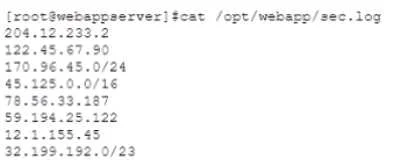
An administrator is reviewing web application logs and discovers several external addresses are trying to perform port scans, SQL injections, or URL oVectory traversal attacks. The administrator is able to create an automated security log for malicious traffic IP addresses and requests. The secunty administrator then uses the following information to protect the server:
Which of the following actions should the security administrator recommend to protect the server?
Exhibit
Options
- Aipaat create badip /opt'webapp/sec.log && ipaat add badip huh lip
- Bipaat create hash badip:ip I firewall-cmd reload
- Cfirewall-cmd --permanent --zone"public ipset create badip hash:ip
- Dfirewall-csid --permanent --ipset=badip --add-entries-from-files=opt/webapp/sec.log
How the community answered
(38 responses)- A21% (8)
- B5% (2)
- C13% (5)
- D61% (23)
Why each option
This question tests the administrator's ability to use firewall-cmd to block a list of malicious IP addresses loaded from a log file using an ipset.
'ipaat' is not a valid Linux command, and the syntax shown does not correspond to any real ipset or firewalld operation.
'ipaat' is not a valid command, and piping to 'firewall-cmd reload' does not correctly create or populate an ipset with entries from a log file.
This command only creates an empty ipset of type hash:ip in the public zone but does not populate it with the malicious IP addresses from the log file.
The firewall-cmd --permanent --ipset=badip --add-entries-from-file option reads IP addresses directly from a specified file and adds them to an existing ipset named 'badip', making the blocks persistent across reboots. This is the correct firewalld mechanism for bulk-loading IP block lists from an automated security log. The --permanent flag ensures the rules survive a firewall service restart.
Concept tested: firewalld ipset bulk IP blocking from file
Source: https://access.redhat.com/documentation/en-us/red_hat_enterprise_linux/8/html/securing_networks/using-and-configuring-firewalld_securing-networks#blocking-ip-addresses-using-an-ipset_using-and-configuring-firewalld
Topics
Community Discussion
No community discussion yet for this question.