
XK0-004 · Question #415
A systems administrator is installing an HTTPD server on a Linux server and configuring it as a proxy server. The administrator runs the following commands to verify that the service is running…
The correct answer is A. Option A. A 503 error from an HTTPD proxy is commonly caused by SELinux blocking the httpd process from initiating outbound network connections to the backend.
Question
A systems administrator is installing an HTTPD server on a Linux server and configuring it as a proxy server. The administrator runs the following commands to verify that the service is running:
However, the administrator is getting a 503 error when browsing to portal . company. internal. After reviewing the logs, the following error information is discovered:
Which Of the following commands BEST resolves the issue?
Exhibit
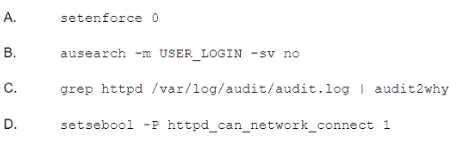
Options
- AOption A
- BOption B
- COption C
- DOption D
How the community answered
(41 responses)- A66% (27)
- B10% (4)
- C20% (8)
- D5% (2)
Why each option
A 503 error from an HTTPD proxy is commonly caused by SELinux blocking the httpd process from initiating outbound network connections to the backend.
When Apache is used as a reverse proxy, the SELinux policy denies httpd from making outbound TCP connections by default, which causes 503 errors and audit denials in the logs. Running setsebool -P httpd_can_network_connect on enables the corresponding SELinux boolean, granting the httpd process permission to connect to upstream servers. The -P flag writes the change persistently so it survives reboots.
Option B does not modify the SELinux boolean that controls whether the httpd process is permitted to initiate outbound network connections.
Option C does not address the SELinux policy enforcement that is blocking the proxy from forwarding requests to the backend service.
Option D does not resolve the underlying SELinux denial recorded in the audit log that prevents httpd from connecting to upstream hosts.
Concept tested: SELinux boolean enabling HTTPD proxy network connections
Source: https://access.redhat.com/documentation/en-us/red_hat_enterprise_linux/8/html/using_selinux/using-selinux-booleans_using-selinux
Topics
Community Discussion
No community discussion yet for this question.