
Veeam
VMCE_V12 · Question #119
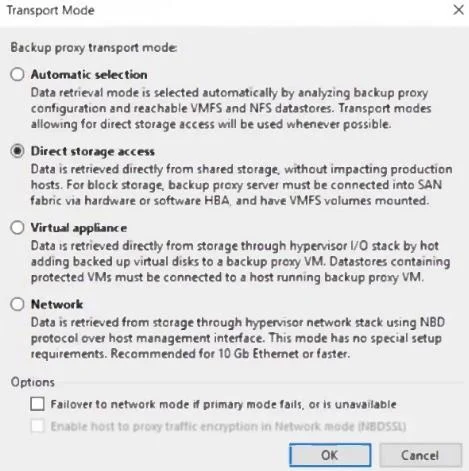
A Veeam proxy server is configured as follows. No modifications are allowed to the transport mode. When performing a restore of a VMware virtual disk using this proxy server, the restore fails. What…
Sign in or unlock VMCE_V12 to reveal the answer and full explanation for question #119. The question stem and answer options stay visible for context.
Backup Infrastructure
Question
A Veeam proxy server is configured as follows. No modifications are allowed to the transport mode. When performing a restore of a VMware virtual disk using this proxy server, the restore fails. What is a possible cause?
Exhibit
Options
- ACBT is enabled on the virtual disk.
- BCBT is disabled on the virtual disk.
- CThe virtual disk is thin-provisioned.
- DThe virtual disk is thick-provisioned
Unlock VMCE_V12 to see the answer
You've previewed enough free VMCE_V12 questions. Unlock VMCE_V12 for full answers, explanations, the timed quiz mode, progress tracking, and the master PDF. Question stem and options stay visible so you can still see what's on the exam.
Topics
#transport mode#thin provisioning#proxy server#restore failure