
TDS-C01 · Question #119
When should you use a relationship instead of a join for two data sets?
The correct answer is C. The data sets include similar data aggregated at different levels of detail. Option C is correct because relationships are specifically designed to handle tables with mismatched levels of detail (LOD). When one table has sales by day and another has quotas by month, a join would inflate row counts (fan-out), producing incorrect aggregations - a…
Question
When should you use a relationship instead of a join for two data sets?
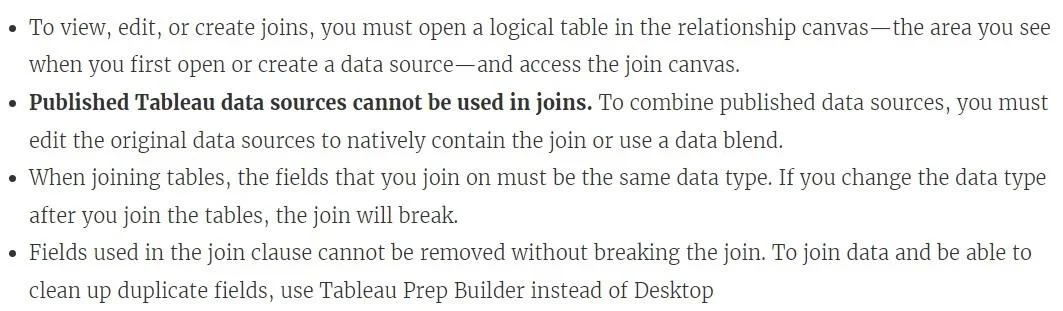
Exhibit
Options
- ATo use both data sets across multiple sheets in a visualization.
- BThe data sets are in two separate tables within a single spreadsheet.
- CThe data sets include similar data aggregated at different levels of detail.
- DThe data sets include similar data aggregated up to the highest level.
How the community answered
(24 responses)- A8% (2)
- B17% (4)
- C67% (16)
- D8% (2)
Explanation
Option C is correct because relationships are specifically designed to handle tables with mismatched levels of detail (LOD). When one table has sales by day and another has quotas by month, a join would inflate row counts (fan-out), producing incorrect aggregations - a relationship lets the query engine resolve each table at its own granularity and combine results correctly.
Why the distractors fail:
- A is wrong - using data across multiple sheets is simply a feature of any published or multi-table data source, not a reason to choose relationships over joins.
- B is wrong - two tables inside a single spreadsheet is a classic join scenario (same source, same LOD); relationships are more relevant across separate tables or sources.
- D is wrong - if both tables are already at the same (highest) aggregation level, a join works fine because there's no LOD mismatch to protect against.
Memory tip: Think "Relationship = Respects different LODs." Whenever you see "different levels of detail" in an answer choice, that's the relationship keyword - joins assume equal granularity, relationships don't.
Topics
Community Discussion
No community discussion yet for this question.