
SAILPOINT-CERTIFIED-IDENTITYNOW-ENGINEER · Question #77
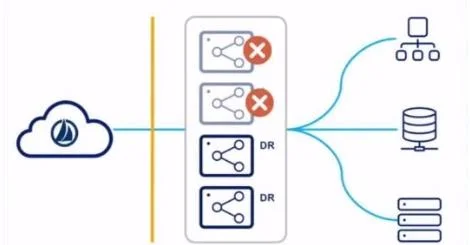
Refer to the following diagram. For this strategy, all virtual appliances (VAs) are deployed in a single VA cluster, with all VAs running concurrently. Some of these VAs are in the primary data…
The correct answer is A. Yes. Yes, the fact that the disaster recovery (DR) VAs are not being utilized until a disaster recovery event occurs is a disadvantage. In this strategy, the DR VAs remain idle, leading to underutilization of resources. These VAs could otherwise handle workloads during normal…
Question
Refer to the following diagram. For this strategy, all virtual appliances (VAs) are deployed in a single VA cluster, with all VAs running concurrently. Some of these VAs are in the primary data center, and others {called OR VAs) are deployed in a DR data center. While using this strategy, is this a disadvantage? Solution: The disaster recovery VAs are not being utilized at all until a disaster recovery event occurs.
Exhibit
Options
- AYes
- BNo
How the community answered
(37 responses)- A73% (27)
- B27% (10)
Explanation
Yes, the fact that the disaster recovery (DR) VAs are not being utilized until a disaster recovery event occurs is a disadvantage. In this strategy, the DR VAs remain idle, leading to underutilization of resources. These VAs could otherwise handle workloads during normal operations to improve efficiency, distribute load, or reduce latency, especially if they are geographically closer to specific target systems. Relying on DR VAs only during failover scenarios limits their potential to optimize performance and balance loads in day-to-day
Topics
Community Discussion
No community discussion yet for this question.