
PT0-001 · Question #126
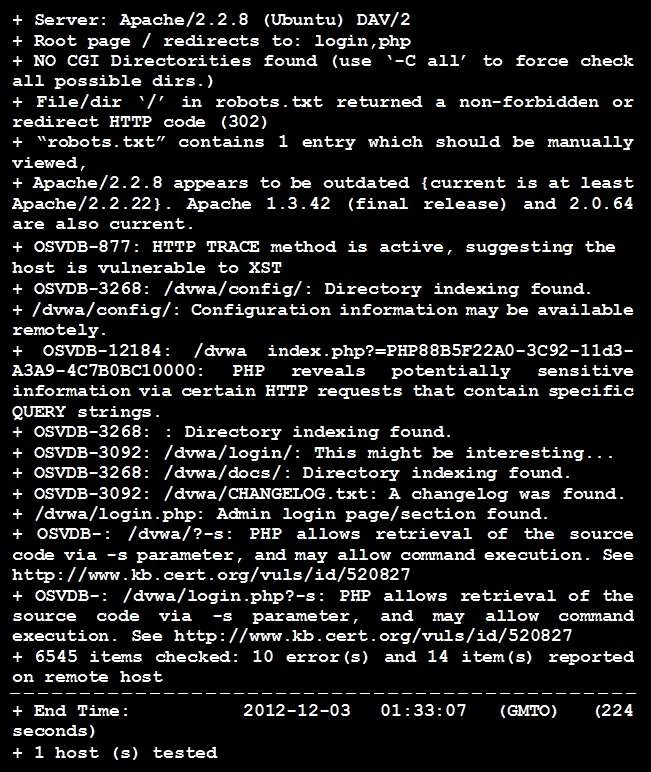
Click the exhibit button. Given the Nikto vulnerability scan output shown in the exhibit, which of the following exploitation techniques might be used to exploit the target system? (Select TWO)
The correct answer is A. Arbitrary code execution D. Login credential brute-forcing. Nikto scans identify outdated server software and exposed administrative login interfaces, which map directly to arbitrary code execution and brute-force credential attacks.
Question
Click the exhibit button. Given the Nikto vulnerability scan output shown in the exhibit, which of the following exploitation techniques might be used to exploit the target system? (Select TWO)
Exhibit
Options
- AArbitrary code execution
- BSession hijacking
- CSQL injection
- DLogin credential brute-forcing
- ECross-site request forgery
How the community answered
(33 responses)- A67% (22)
- B9% (3)
- C21% (7)
- E3% (1)
Why each option
Nikto scans identify outdated server software and exposed administrative login interfaces, which map directly to arbitrary code execution and brute-force credential attacks.
Nikto commonly flags unpatched server software, vulnerable CGI scripts, and dangerous HTTP methods that are directly exploitable for arbitrary code execution against the target system.
Session hijacking requires capturing or manipulating active session tokens at the network or application layer, which is not a primary finding category in Nikto scan output.
SQL injection requires testing application input fields for improper sanitization; Nikto is a web server and configuration scanner, not an application-level input fuzzer.
Nikto identifies default and exposed login pages along with admin interfaces, making those endpoints prime targets for login credential brute-forcing using tools such as Hydra or Medusa.
Cross-site request forgery exploits the trust a web application places in an authenticated user's browser, and while Nikto may note missing CSRF headers, this is not a direct exploitation path derived from typical Nikto findings.
Concept tested: Mapping Nikto scan findings to exploitation techniques
Source: https://cirt.net/Nikto2
Topics
Community Discussion
No community discussion yet for this question.