
PSE-PLATFORM · Question #93
Which three options are available when creating a security profile? (Choose three)
The correct answer is A. Configuring the administrative Distance for RIP to be lower than that of OSPF Int.. Explanation/Reference: Using the URL Category as match criteria allows you to customize security profiles (antivirus, anti-spyware, vulnerability, file-blocking, Data Filtering, and DoS) on a per-URL-category basis. Explanation/Reference: The best route is then selected among the
Question
Which three options are available when creating a security profile? (Choose three)
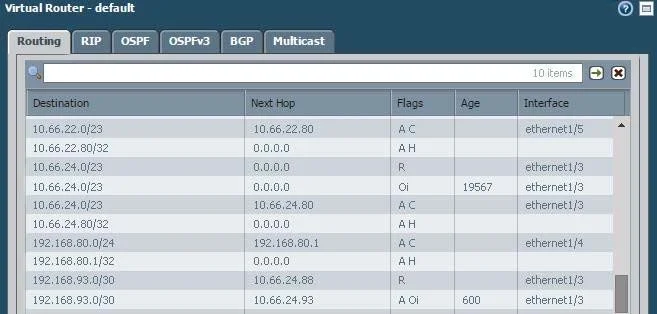
Exhibit
Options
- AConfiguring the administrative Distance for RIP to be lower than that of OSPF Int.
- BConfiguring the metric for RIP to be higher than that of OSPF Int.
- CConfiguring the administrative Distance for RIP to be higher than that of OSPF Ext.
- DConfiguring the metric for RIP to be lower than that OSPF Ext.
- EThreat Prevention
- FAntivirus
How the community answered
(42 responses)- A86% (36)
- B2% (1)
- C7% (3)
- E2% (1)
- F2% (1)
Explanation
Explanation/Reference: Using the URL Category as match criteria allows you to customize security profiles (antivirus, anti-spyware, vulnerability, file-blocking, Data Filtering, and DoS) on a per-URL-category basis. Explanation/Reference: The best route is then selected among them based on Administrative Distance (AD) value of routing protocols which routes came from and that route is marked with flag A, stating that it is the Active route. Administrative distance (AD) is an arbitrary numerical value assigned to dynamic routes, static routes and directly-connected routes. The value is used by vendor- specific routers to rank routes from most preferred to least preferred. When multiple paths to the same destination are available, the router uses the route with the lowest administrative distance and inserts the preferred route into its routing table. https://live.paloaltonetworks.com/t5/Management-Articles/Routing-Table-has-Multiple-Prefixes-for-the-Same-Route/ta-p/54781
Topics
Community Discussion
No community discussion yet for this question.