
PROFESSIONAL-DATA-ENGINEER · Question #273
You are designing a system that requires an ACID-compliant database. You must ensure that the system requires minimal human intervention in case of a failure. What should you do?
The correct answer is B. Partition table data by create_date cluster table data by tocation_id and device_version. Explanation/Reference: Point-in-time recovery logs are created automatically, but restoring an instance in case of failure requires manual steps. https://cloud.google.com/sql/docs/mysql/backup-recovery/pitr#perform-pitr High availability, in case of failure requires no human…
Question
Exhibit
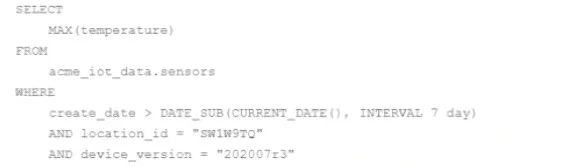
Options
- APartition table data by create_date, location_id and device_version
- BPartition table data by create_date cluster table data by tocation_id and device_version
- CCluster table data by create_date location_id and device_version
- DCluster table data by create_date, partition by location and device_version
How the community answered
(27 responses)- A4% (1)
- B93% (25)
- D4% (1)
Explanation
Explanation/Reference: Point-in-time recovery logs are created automatically, but restoring an instance in case of failure requires manual steps. https://cloud.google.com/sql/docs/mysql/backup-recovery/pitr#perform-pitr High availability, in case of failure requires no human intervention: "If an HA-configured instance becomes unresponsive, Cloud SQL automatically switches to by location_id and device_version with the following query: You want to optimize your queries for cost and performance. How should you structure your data? Explanation/Reference:
Topics
Community Discussion
No community discussion yet for this question.