
PROFESSIONAL-CLOUD-DEVELOPER · Question #334
You recently deployed an Apigee API proxy to your organization across two regions. Both regions are configured with a separate backend that is hosting the API. You need to configure Apigee to route…
The correct answer is D. Configure a TargetServer for each region's backend host names. Configure the API proxy to. In Apigee, a TargetServer is a named, reusable backend endpoint definition. By creating one TargetServer for each region's backend hostname, you decouple the backend address from the proxy logic. You then configure the API proxy's route rules to select the correct TargetServer…
Question
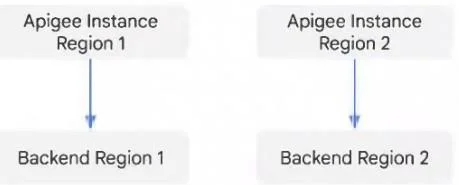
You recently deployed an Apigee API proxy to your organization across two regions. Both regions are configured with a separate backend that is hosting the API. You need to configure Apigee to route traffic to the appropriate local region backend. What should you do?
Exhibit
Options
- ACreate a TargetEndpoint with a weighted load balancing algorithm. Configure the API proxy to
- BConfigure a regional internal Application Load Balancer in each region, and use health checks to
- CConfigure a global external Application Load Balancer and configure each region's backend with
- DConfigure a TargetServer for each region's backend host names. Configure the API proxy to
How the community answered
(32 responses)- A9% (3)
- B3% (1)
- C6% (2)
- D81% (26)
Explanation
In Apigee, a TargetServer is a named, reusable backend endpoint definition. By creating one TargetServer for each region's backend hostname, you decouple the backend address from the proxy logic. You then configure the API proxy's route rules to select the correct TargetServer based on the request's origin region (e.g., using a condition on the region variable or a message template). This is the native Apigee pattern for regional routing. Options B and C involve load balancers external to Apigee, which adds unnecessary complexity and doesn't solve the Apigee-layer routing requirement. Option A's weighted load balancing distributes traffic by percentage, not by region.
Topics
Community Discussion
No community discussion yet for this question.