
PROFESSIONAL-CLOUD-ARCHITECT · Question #7
Your marketing department wants to send out a promotional email campaign. The development team wants to minimize direct operation management. They project a wide range of possible customer…
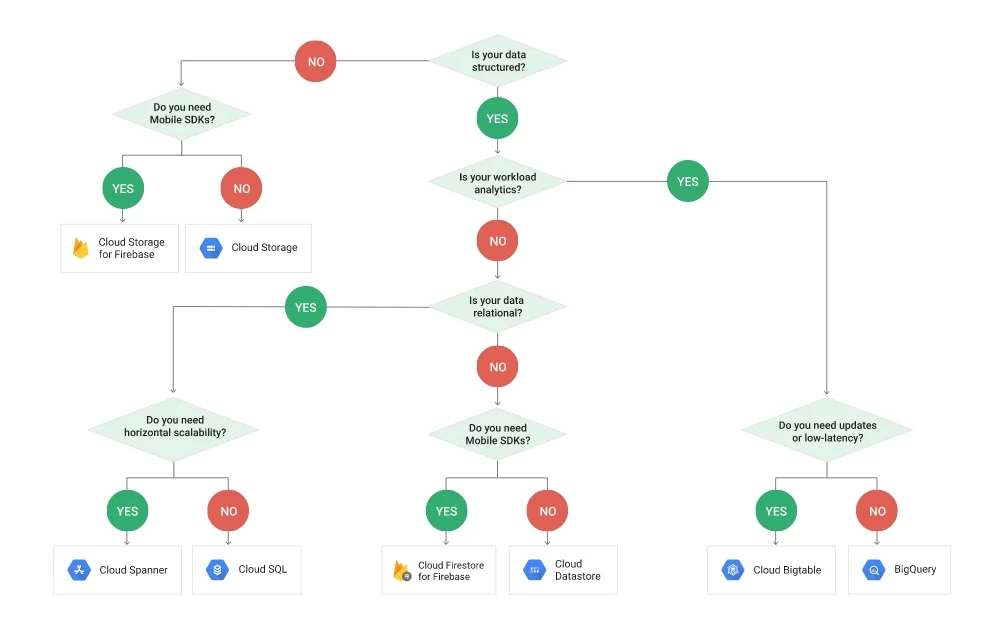
The correct answer is A. Use Google App Engine to serve the website and Google Cloud Datastore to store user data. C. Use a managed instance group to serve the website and Google Cloud Bigtable to store user. A (App Engine + Datastore) and C (Managed Instance Group + Bigtable) both satisfy the two critical constraints: auto-scaling across the extreme traffic range (100–500,000 requests/day) and minimizing operational management. App Engine is a fully managed PaaS that scales…
Question
Exhibit
Options
- AUse Google App Engine to serve the website and Google Cloud Datastore to store user data.
- BUse a Google Container Engine cluster to serve the website and store data to persistent disk.
- CUse a managed instance group to serve the website and Google Cloud Bigtable to store user
- DUse a single compute Engine virtual machine (VM) to host a web server, backed by Google Cloud
How the community answered
(28 responses)- A46% (13)
- B36% (10)
- D18% (5)
Explanation
A (App Engine + Datastore) and C (Managed Instance Group + Bigtable) both satisfy the two critical constraints: auto-scaling across the extreme traffic range (100–500,000 requests/day) and minimizing operational management. App Engine is a fully managed PaaS that scales automatically with zero infrastructure configuration, while Datastore is a serverless NoSQL database requiring no DBA work. Managed instance groups similarly handle auto-scaling for compute, and Bigtable is a fully managed, high-throughput database built to absorb massive spike workloads.
B is wrong because Google Container Engine (GKE) requires cluster node management and operational overhead, and persistent disk is block storage - not a database - making it unsuitable for storing user data at scale. D is wrong because a single Compute Engine VM cannot scale at all; it becomes a bottleneck and single point of failure when traffic spikes to 500,000 requests, and it requires the most hands-on management of any option.
Memory tip: When an exam question says "minimize management" + "unpredictable/wide traffic range," mentally filter to fully managed and auto-scaling services - App Engine and managed instance groups pass that filter, while bare VMs and manually managed clusters fail it immediately.
Topics
Community Discussion
No community discussion yet for this question.