
Palo_Alto_Networks
PCNSE · Question #719
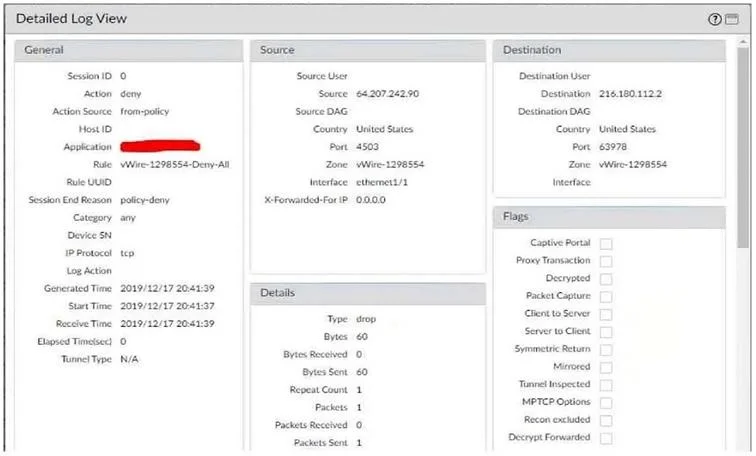
With the default TCP and UDP settings on the firewall, what will be the identified application in the following session?
Sign in or unlock PCNSE to reveal the answer and full explanation for question #719. The question stem and answer options stay visible for context.
Submitted by lucia.co· Apr 18, 2026Operate
Question
With the default TCP and UDP settings on the firewall, what will be the identified application in the following session?
Exhibit
Options
- Ainsufficient-data
- Bincomplete
- Cnot-applicable
- Dunknown-tcp
Unlock PCNSE to see the answer
You've previewed enough free PCNSE questions. Unlock PCNSE for full answers, explanations, the timed quiz mode, progress tracking, and the master PDF. Question stem and options stay visible so you can still see what's on the exam.
Topics
#App-ID#Session Identification#Firewall Basics#App-ID States