
PCNSE · Question #261
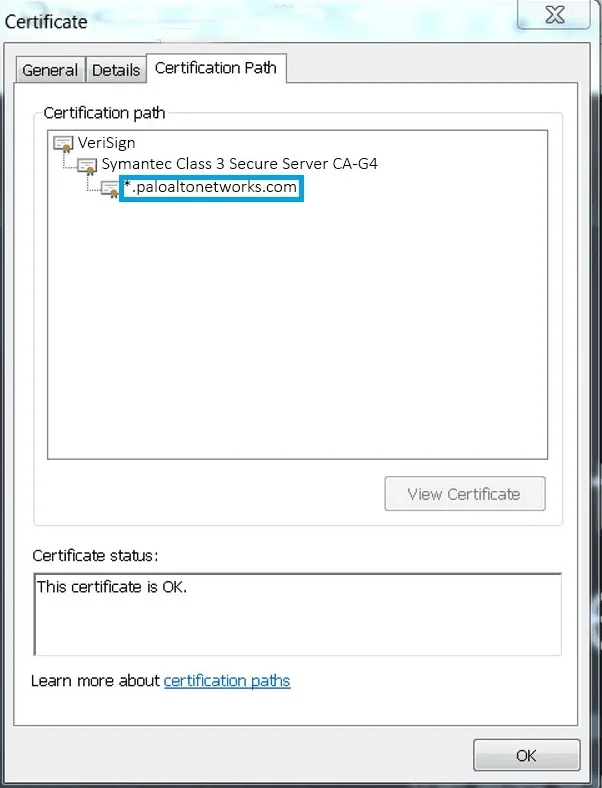
Based on the following image, what is the correct path of root, intermediate, and end-user certificate?
The correct answer is B. VeriSign > Symantec > Palo Alto Networks. A certificate chain establishes trust by linking an end-user certificate back to a trusted Root Certificate Authority through a series of intermediate certificates.
Question
Based on the following image, what is the correct path of root, intermediate, and end-user certificate?
Exhibit
Options
- APalo Alto Networks > Symantec > VeriSign
- BVeriSign > Symantec > Palo Alto Networks
- CSymantec > VeriSign > Palo Alto Networks
- DVeriSign > Palo Alto Networks > Symantec
How the community answered
(64 responses)- A5% (3)
- B91% (58)
- C2% (1)
- D3% (2)
Why each option
A certificate chain establishes trust by linking an end-user certificate back to a trusted Root Certificate Authority through a series of intermediate certificates.
This order incorrectly places Palo Alto Networks as the root and Symantec as an intermediate, which does not reflect a standard certificate chain hierarchy.
In a common certificate hierarchy, VeriSign acts as a well-known Root Certificate Authority, Symantec could function as an Intermediate CA signing authority, and Palo Alto Networks would typically represent the End-User (leaf) certificate issued for a specific device or service.
This order incorrectly positions Symantec as the root and VeriSign as an intermediate, which contradicts the typical roles of these certificate authorities.
This order incorrectly places Palo Alto Networks as the intermediate certificate and Symantec as the end-user, misrepresenting the trust chain.
Concept tested: Certificate chain hierarchy (Root, Intermediate, End-User)
Source: https://docs.paloaltonetworks.com/pan-os/10-2/pan-os-admin/decryption/decryption-concepts/how-certificate-authority-works
Topics
Community Discussion
No community discussion yet for this question.