
P_SAPEA_2023 · Question #45
Your company adapts SAP's Integration Solution Advisory Methodology (ISA-M) as an Integration Solution Playbook. In your role as Lead Enterprise Architect, you are asked to decide which integration…
The correct answer is C. 1. Document and review the existing integration (architecture). According to the SAP Integration Solution Advisory Methodology (ISA-M), which is a methodology offered by SAP that helps enterprise architects define an integration strategy for their organizations and derive related integration guidelines, the recommended approach for…
Question
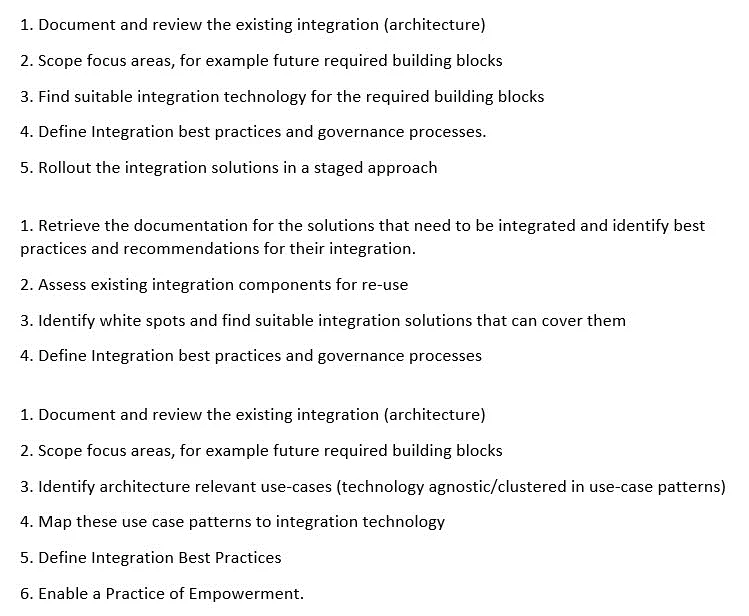
Your company adapts SAP's Integration Solution Advisory Methodology (ISA-M) as an Integration Solution Playbook. In your role as Lead Enterprise Architect, you are asked to decide which integration approach to take for this solution. Which of the following approaches is recommended by SAP ISA-M for identifying an integration solution and strategy?
Exhibit
Options
- A
- Document and review the existing integration (architecture)
- B
- Retrieve the documentation for the solutions that need to be integrated and identify best
- C
- Document and review the existing integration (architecture)
How the community answered
(53 responses)- A13% (7)
- B6% (3)
- C81% (43)
Explanation
According to the SAP Integration Solution Advisory Methodology (ISA-M), which is a methodology offered by SAP that helps enterprise architects define an integration strategy for their organizations and derive related integration guidelines, the recommended approach for identifying an integration solution and strategy is: Document and review the existing integration (architecture). This step involves documenting and analyzing the current state of the integration landscape, including the integration scenarios, technologies, patterns, standards, and governance processes. The goal is to understand the strengths and weaknesses of the existing integration (architecture) and identify the gaps and improvement areas. Scope focus areas, for example future required building blocks. This step involves defining and prioritizing the focus areas for the integration project, such as new or changed business requirements, integration scenarios, or technologies. The focus areas are derived from the gaps and improvement areas identified in the previous step, as well as from the business goals and drivers of the organization. The focus areas are also mapped to future required building blocks, which are logical components that represent the desired capabilities or functionalities of the integration solution. Identify architecture relevant use-cases (technology agnostic/clustered in use-case patterns). This step involves identifying and describing the use-cases that are relevant for the integration project, such as process integration, data integration, user integration, or thing integration. The use-cases are technology agnostic, meaning that they do not specify any particular technology or service for implementation. The use-cases are also clustered in use-case patterns, which are generic templates that capture the common characteristics and requirements of similar use- Map these use case patterns to integration technology. This step involves mapping the use-case patterns to suitable integration technologies or services that can implement them. The mapping is based on a set of criteria and decision tables that consider various aspects of the use-case patterns, such as complexity, performance, security, or scalability. The mapping also takes into account the existing or planned integration technologies or services in the organization's Define Integration Best Practices. This step involves defining and documenting the best practices and guidelines for designing, developing, testing, deploying, monitoring, and governing the integration solutions. The best practices and guidelines are based on SAP's recommendations and industry standards, as well as on the organization's specific needs and preferences. The best practices and guidelines also cover various aspects of the integration project, such as naming conventions, error handling, logging, tracing, or versioning. Enable a Practice of Empowerment. This step involves enabling and empowering the different roles and personas involved in the integration project, such as integration architects, developers, testers, operators, or business users. The goal is to foster a culture of collaboration and innovation among the stakeholders, and to provide them with the necessary skills, tools, and resources to execute their tasks effectively and efficiently.
Topics
Community Discussion
No community discussion yet for this question.