nerdexam
The_Open_Group

OGEA-101 · Question #14

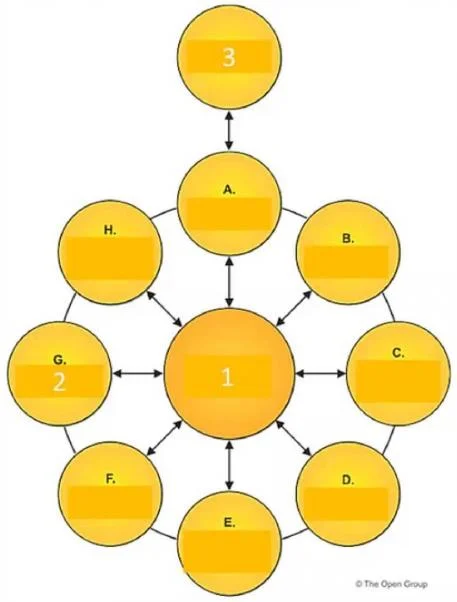
Consider the illustration showing an architecture development cycle. Which description matches the phase of the ADM labeled as item 1?

The correct answer is C. Operates the process of managing architecture requirements. The illustration shows an architecture development cycle based on the TOGAF ADM (Architecture Development Method), which is a method for developing and managing an enterprise architecture. The ADM consists of nine phases, each with a specific purpose and output. The phases are…

ADM Phases: Requirements Management

Question

Consider the illustration showing an architecture development cycle. Which description matches the phase of the ADM labeled as item 1?

Exhibit
OGEA-101 question #14 exhibit

Options

  • AConducts implementation planning for the architecture defined in previous phases
  • BProvides architectural oversight for the implementation
  • COperates the process of managing architecture requirements
  • DEstablishes procedures for managing change to the new architecture

How the community answered

(17 responses)
  • A
    6% (1)
  • B
    18% (3)
  • C
    71% (12)
  • D
    6% (1)

Explanation

The illustration shows an architecture development cycle based on the TOGAF ADM (Architecture Development Method), which is a method for developing and managing an enterprise architecture. The ADM consists of nine phases, each with a specific purpose and output. The phases are: Preliminary Phase: To prepare and initiate the architecture development cycle, including defining the architecture framework, principles, and governance. Phase A: Architecture Vision: To define the scope, vision, and stakeholders of the architecture initiative, and to obtain approval to proceed. Phase B: Business Architecture: To describe the baseline and target business architecture, and to identify the gaps between them. Phase C: Information Systems Architectures: To describe the baseline and target data and application architectures, and to identify the gaps between them. Phase D: Technology Architecture: To describe the baseline and target technology architecture, and to identify the gaps between them. Phase E: Opportunities and Solutions: To identify and evaluate the opportunities and solutions for implementing the target architecture, and to define the work packages and transition Phase F: Migration Planning: To finalize the implementation and migration plan, and to ensure alignment with the enterprise portfolio and project management. Phase G: Implementation Governance: To provide architecture oversight and guidance for the implementation projects, and to manage any architecture change requests. Phase H: Architecture Change Management: To monitor the changes in the business and technology environment, and to assess the impact and performance of the architecture. In addition to these phases, there is a central process called Requirements Management, which is labeled as item 1 in the illustration. This process operates throughout the ADM cycle, and its purpose is to manage the architecture requirements throughout the architecture development, ensuring that they are aligned with the business requirements and the stakeholder concerns. Therefore, the description that matches the phase of the ADM labeled as item 1 is C. Operates the process of managing architecture requirements.

Topics

#Requirements Management#ADM phases#requirements process#phase identification

Community Discussion

No community discussion yet for this question.

Full OGEA-101 Practice