
Fortinet
NSE7_OTS-7.2 · Question #56
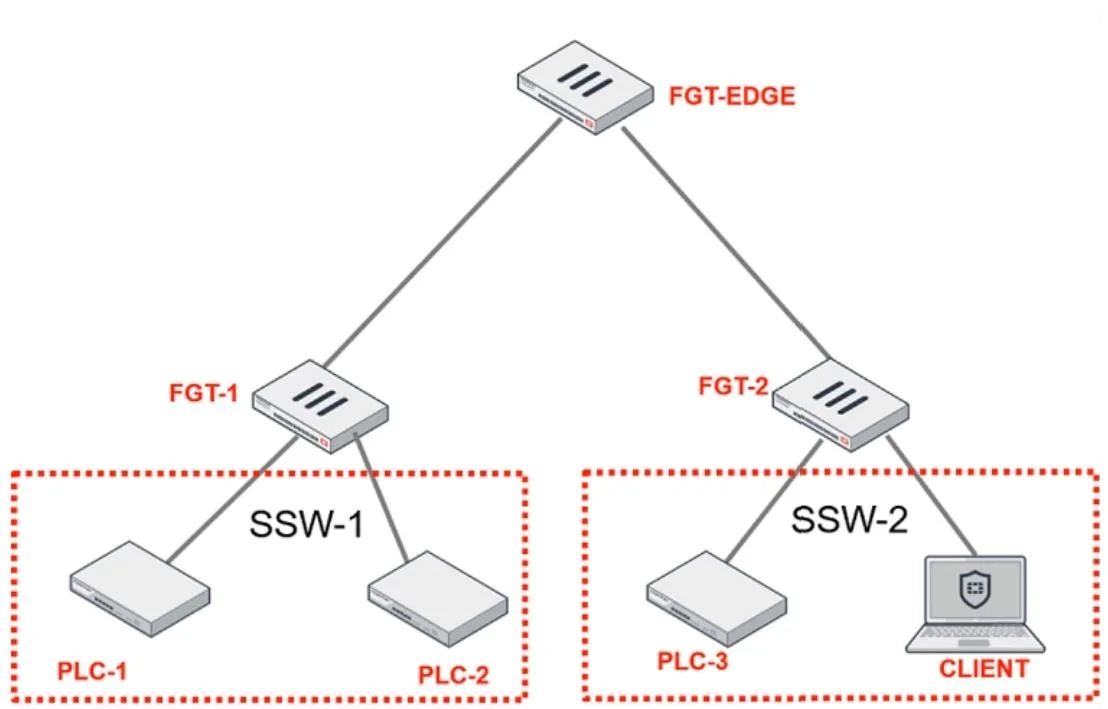
Refer to the exhibit. PLC-3 and CLIENT can send traffic to PLC-1 and PLC-2. FGT-2 has only one software switch (SSW-1) connecting both PLC-3 and CLIENT. PLC-3 and CLIENT cannot send traffic to each…
Sign in or unlock NSE7_OTS-7.2 to reveal the answer and full explanation for question #56. The question stem and answer options stay visible for context.
FortiGate OT Security
Question
Refer to the exhibit. PLC-3 and CLIENT can send traffic to PLC-1 and PLC-2. FGT-2 has only one software switch (SSW-1) connecting both PLC-3 and CLIENT. PLC-3 and CLIENT cannot send traffic to each other. Which two statements about the traffic between PCL-1 and PLC-2 are true? (Choose two.)
Exhibit
Options
- AThe switch on FGT-2 must be hardware to implement micro-segmentation.
- BMicro-segmentation on FGT-2 prevents direct device-to-device communication.
- CTraffic must be inspected by FGT-EDGE in OT networks.
- DFGT-2 controls intra-VLAN traffic through firewall policies.
Unlock NSE7_OTS-7.2 to see the answer
You've previewed enough free NSE7_OTS-7.2 questions. Unlock NSE7_OTS-7.2 for full answers, explanations, the timed quiz mode, progress tracking, and the master PDF. Question stem and options stay visible so you can still see what's on the exam.
Topics
#software switch#micro-segmentation#intra-VLAN firewall policy#device-to-device control