
NSE5_FSM-6.3 · Question #2
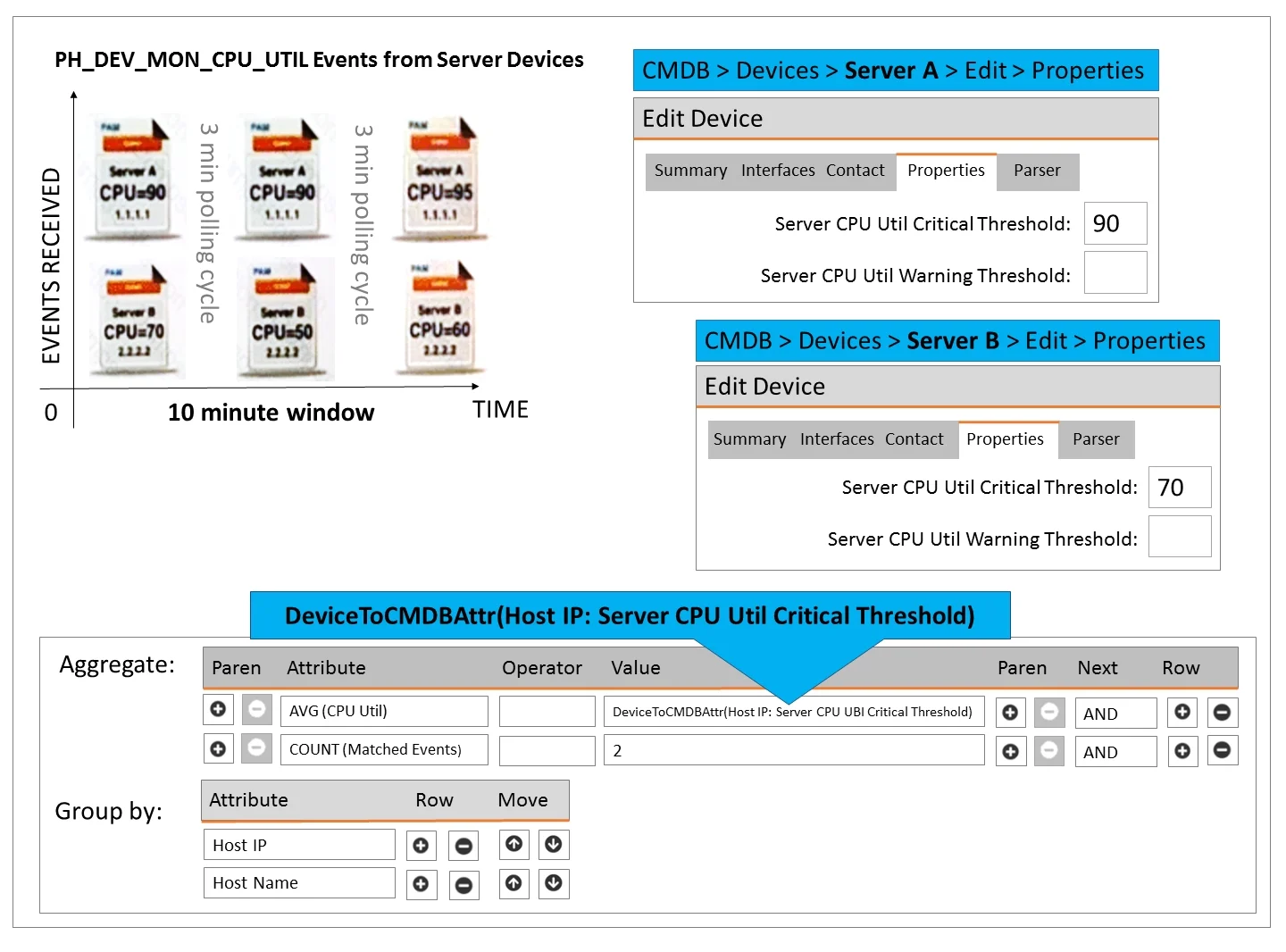
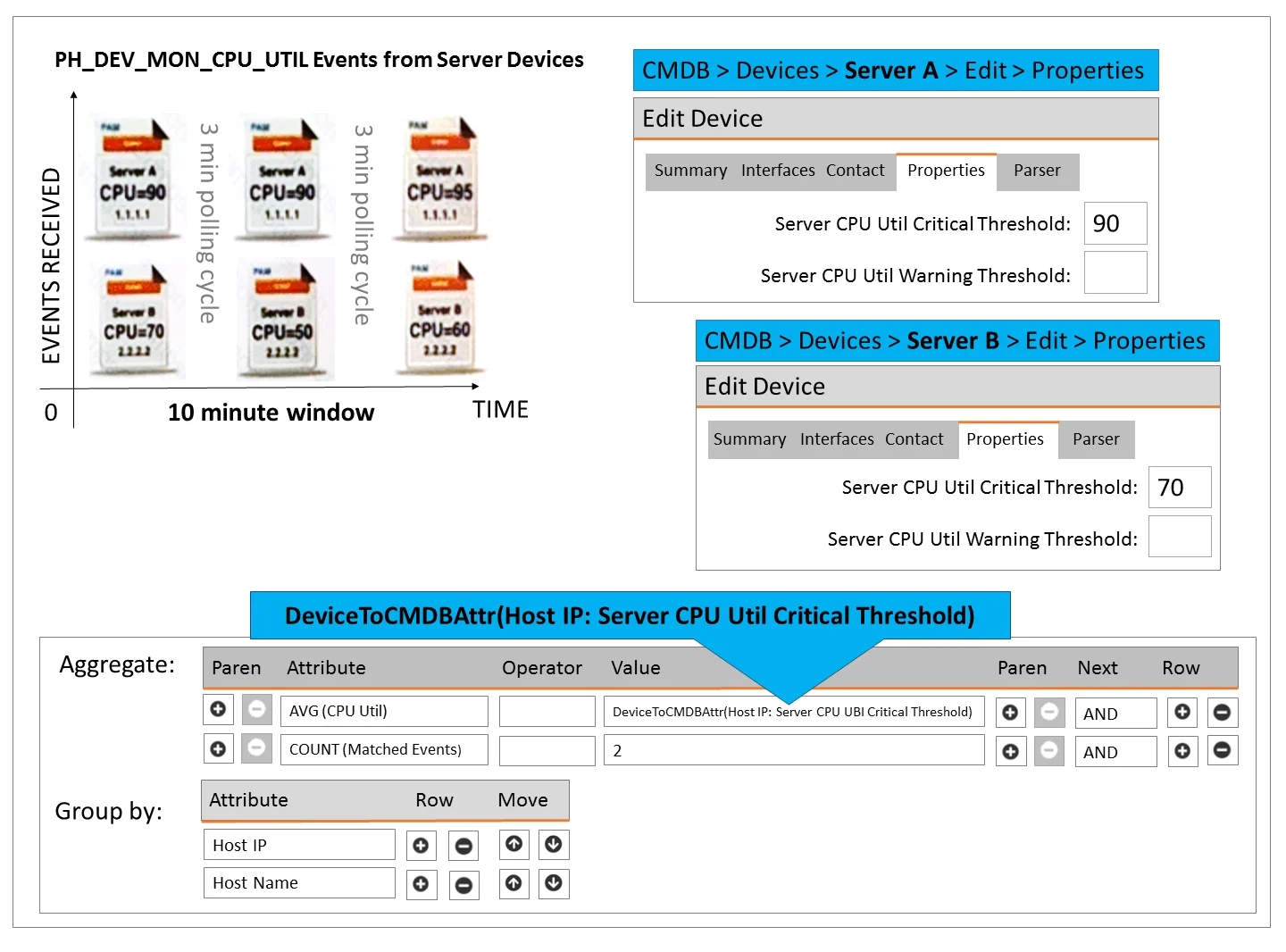
Refer to the exhibits. Three events are collected over a 10-minute time period from two servers: Server A and Server B. Based on the settings being used for the rule subpattern, how many incidents…
The correct answer is B. Server A will generate one incident and Server B will not generate any incidents. Event Collection Overview: The exhibits show three events collected over a 10-minute period from two servers, Server A and Server B. Rule Subpattern Settings: The rule subpattern specifies two conditions: AVG(CPU Util) > DeviceToCMDBAttr(Host IP : Server CPU Util Critical…
Question
Refer to the exhibits. Three events are collected over a 10-minute time period from two servers:
Server A and Server B. Based on the settings being used for the rule subpattern, how many incidents will the servers generate?
Exhibits
Options
- AServer A will generate one incident and Server B will generate one incident.
- BServer A will generate one incident and Server B will not generate any incidents.
- CServer B will generate one incident and Server A will not generate any incidents.
- DServer A will not generate any incidents and Server B will not generate any incidents.
How the community answered
(69 responses)- A7% (5)
- B72% (50)
- C16% (11)
- D4% (3)
Explanation
Event Collection Overview: The exhibits show three events collected over a 10-minute period from two servers, Server A and Server B. Rule Subpattern Settings: The rule subpattern specifies two conditions: AVG(CPU Util) > DeviceToCMDBAttr(Host IP : Server CPU Util Critical Threshold): This checks if the average CPU utilization exceeds the critical threshold defined for each server. COUNT(Matched Events) >= 2: This requires at least two matching events within the specified Server A Analysis: Events: Three events (CPU=90, CPU=90, CPU=95). Average CPU Utilization: (90+90+95)/3 = 91.67, which exceeds the critical threshold of 90. Matched Events Count: 3, which meets the condition of being greater than or equal to 2. Incident Generation: Server A meets both conditions, so it generates one incident. Server B Analysis: Events: Three events (CPU=70, CPU=50, CPU=60). Average CPU Utilization: (70+50+60)/3 = 60, which does not exceed the critical threshold of 90. Matched Events Count: 3, but since the average CPU utilization condition is not met, no incident Conclusion: Based on the rule subpattern, Server A will generate one incident, and Server B will not generate any incidents.
Topics
Community Discussion
No community discussion yet for this question.