
NSE4 · Question #94
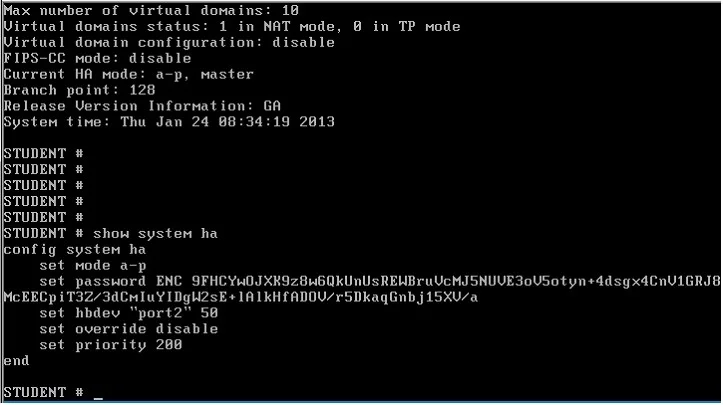
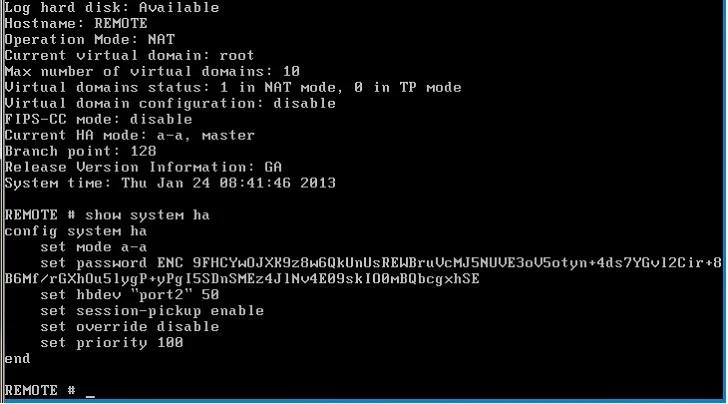
Two FortiGate devices fail to form an HA cluster, the device hostnames are STUDENT and REMOTE. Exhibit A shows the command output of show system ha for the STUDENT device. Exhibit B shows the…
The correct answer is B. HA mode. The question asks to identify the most likely reason for HA cluster formation failure based on show system ha outputs from two FortiGate devices.
Question
Two FortiGate devices fail to form an HA cluster, the device hostnames are STUDENT and REMOTE. Exhibit A shows the command output of show system ha for the STUDENT device. Exhibit B shows the command output of show system ha for the REMOTE device. Exhibit A:
Exhibit B Which one of the following is the most likely reason that the cluster fails to form?
Exhibits
Options
- APassword
- BHA mode
- CHearbeat
- DOverride
How the community answered
(34 responses)- A12% (4)
- B59% (20)
- C6% (2)
- D24% (8)
Why each option
The question asks to identify the most likely reason for HA cluster formation failure based on `show system ha` outputs from two FortiGate devices.
The output for `ha-password` is not displayed in the provided exhibits, so there is no information to suggest a password mismatch.
Exhibit A (STUDENT) shows `ha-mode: a-p` (active-passive), while Exhibit B (REMOTE) shows `ha-mode: standalone`. For two FortiGate units to form an HA cluster, they must be configured with compatible HA modes; a device in standalone mode cannot join an HA cluster.
While heartbeat interfaces are crucial for HA, the `show system ha` command output does not explicitly show any misconfigurations or failures related to heartbeat interfaces in these exhibits.
The `override` setting is visible in both exhibits and is consistent (`override: disable`), so it is not the cause of the failure.
Concept tested: FortiGate HA cluster formation requirements (HA mode)
Source: https://docs.fortinet.com/document/fortigate/7.4.0/fortios-high-availability/13444/initial-ha-configuration
Topics
Community Discussion
No community discussion yet for this question.