
NCA-5.15 · Question #42
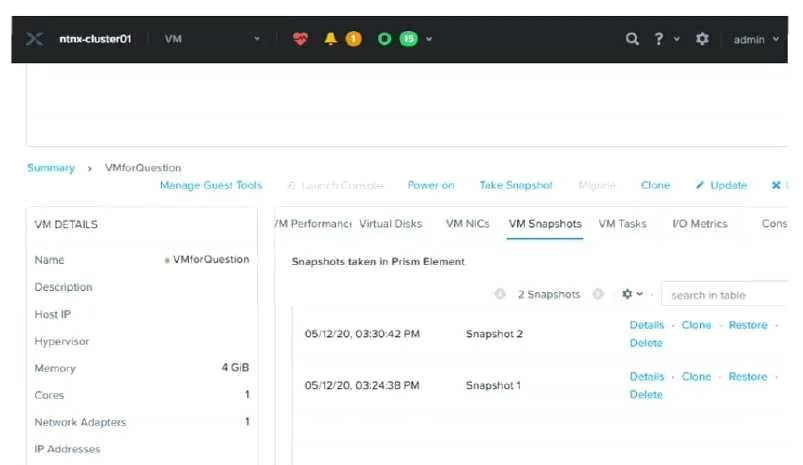
Refer to the exhibit. Management has tasked an administrator to restore the VM, VMforQuestion to a previous point in time (3:20pm), to recover from a corrupted set of files. Which snapshot should…
The correct answer is D. Snapshot 1 Details, review restore points. then Clone. The goal is to recover from corruption that occurred at 3:20 PM, meaning the administrator needs a snapshot taken BEFORE that time - Snapshot 1. The correct workflow is to open Snapshot 1's Details to review its restore points (application-consistent crash-consistent points…
Question
Refer to the exhibit. Management has tasked an administrator to restore the VM, VMforQuestion to a previous point in time (3:20pm), to recover from a corrupted set of files. Which snapshot should the administrator choose, and which action(s) should be executed?
Exhibit
Options
- ASnapshot 2 Details review restore points. then Clone
- BSnapshot 2 Restore
- CSnapshot 1, Restore
- DSnapshot 1 Details, review restore points. then Clone
How the community answered
(27 responses)- A4% (1)
- B15% (4)
- C7% (2)
- D74% (20)
Explanation
The goal is to recover from corruption that occurred at 3:20 PM, meaning the administrator needs a snapshot taken BEFORE that time - Snapshot 1. The correct workflow is to open Snapshot 1's Details to review its restore points (application-consistent crash-consistent points captured within the snapshot window), then Clone rather than Restore. Cloning creates a copy of the VM from the snapshot without overwriting the production VM, allowing the administrator to validate the recovered data before committing. A direct Restore (options B and C) is destructive and irreversible - best practice is to clone first, verify, then restore if confirmed correct. Snapshot 2 (options A and B) would be taken after the corruption event and would contain the corrupted files.
Topics
Community Discussion
No community discussion yet for this question.