
MLS-C01 · Question #6
Machine Learning Specialist is working with a media company to perform classification on popular articles from the company's website. The company is using random forests to classify how popular an…
The correct answer is B. One-hot encoding. Day_Of_Week is a nominal categorical variable (Monday, Tuesday, etc.) with no intrinsic numeric ordering. One-hot encoding converts each category into a separate binary (0/1) column, allowing tree-based models like random forests to treat each day independently without implying…
Question
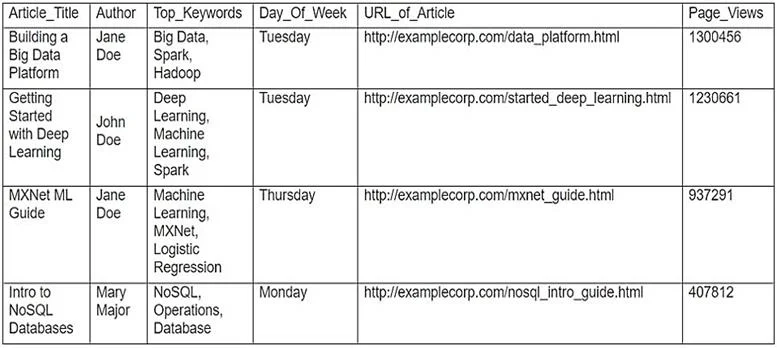
Machine Learning Specialist is working with a media company to perform classification on popular articles from the company's website. The company is using random forests to classify how popular an article will be before it is published. A sample of the data being used is below. Given the dataset, the Specialist wants to convert the Day_Of_Week column to binary values. What technique should be used to convert this column to binary values?
Exhibit
Options
- ABinarization
- BOne-hot encoding
- CTokenization
- DNormalization transformation
How the community answered
(44 responses)- A5% (2)
- B93% (41)
- D2% (1)
Explanation
Day_Of_Week is a nominal categorical variable (Monday, Tuesday, etc.) with no intrinsic numeric ordering. One-hot encoding converts each category into a separate binary (0/1) column, allowing tree-based models like random forests to treat each day independently without implying any ordinal relationship. Binarization (A) thresholds a single numeric value into 0 or 1 and is not designed for multi-class categories. Tokenization (C) is a text-processing step that splits strings into tokens. Normalization (D) scales existing numeric values to a standard range and is not applicable to categorical string data.
Topics
Community Discussion
No community discussion yet for this question.