
MCD-LEVEL-1 · Question #157
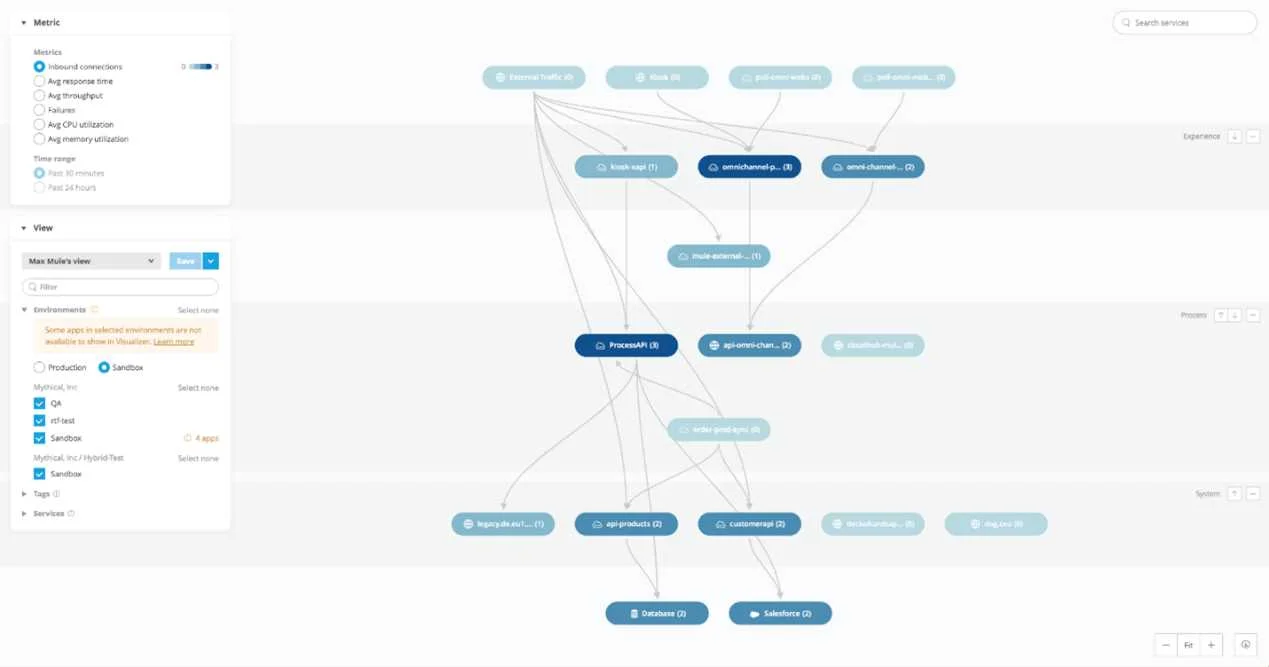
Which Mule component provides a real-time, graphical representation of the APIs and mule applications that are running and discoverable?
The correct answer is B. An Object containing all three Mule event Objects. Correct answer is Anypoint Visualizer MuleSoft Doc Ref : https://docs.mulesoft.com/visualizer/ Anypoint Visualizer provides a real-time, graphical representation of the APIs, and Mule applications that are running and discoverable. It also displays third-party systems that are…
Question
Which Mule component provides a real-time, graphical representation of the APIs and mule applications that are running and discoverable?
Exhibit
Options
- AAn Array of the three Mule event Objects
- BAn Object containing all three Mule event Objects
- CAn Array of the three JSON payload Objects
- DAn Object containing all three JSON payload Objects
How the community answered
(29 responses)- A3% (1)
- B93% (27)
- D3% (1)
Explanation
Correct answer is Anypoint Visualizer MuleSoft Doc Ref : https://docs.mulesoft.com/visualizer/ Anypoint Visualizer provides a real-time, graphical representation of the APIs, and Mule applications that are running and discoverable. It also displays third-party systems that are invoked by a Mule API, proxy, or application within your application network. The data displayed in the graph is dynamically updated and does not require prior configuration. Additionally, the data displayed is secure, as only users with the proper permissions can view the application network graph. A Scatter-Gather processes three separate HTTP requests. Each request returns a Mule event with a JSON payload. What is the final output of the Scatter-Gather? Correct answer is An Object containing all three Mule event Objects The Scatter-Gather component is a routing event processor that processes a Mule event through different parallel processing routes that contain different event processors. Each route receives a routes uses a separate thread to execute the event processors, and the resulting Mule event can be either the same Mule event without modifications or a new Mule event with its own payload, attributes, and variables. The Scatter-Gather component then combines the Mule events returned by each processing route into a new Mule event that is passed to the next event processor only after every route completes successfully. The Scatter-Gather component executes each route in parallel, not sequentially. Parallel execution of routes can greatly increase the efficiency of your Mule application and may provide more information than sequential processing. Sample output is as below MuleSoft Documentation reference : https://docs.mulesoft.com/mule-runtime/4.3/scatter-gather-
Topics
Community Discussion
No community discussion yet for this question.