
JN0-649 · Question #192
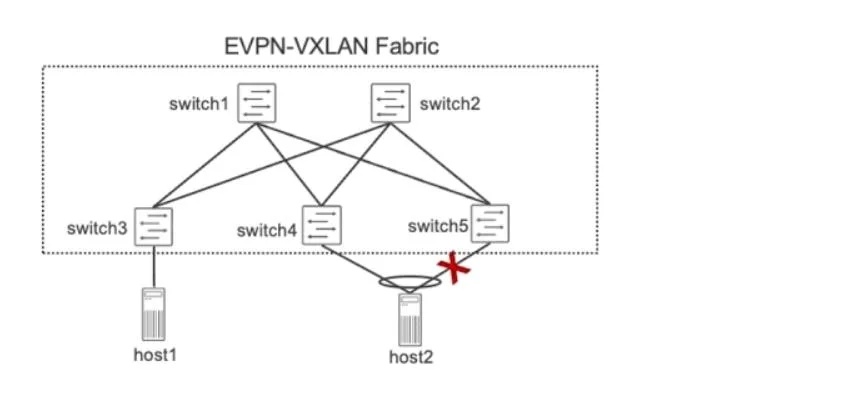
Referring to the exhibit, which statement is correct when a failure exists on the link between host2 and switch5 on this EVPN-VXLAN fabric?
The correct answer is C. The switch5 device will send a Type 1 route to all peers. Type 1 routes are used for per-ES auto-discovery (A-D) to advertise EVPN multi-homing mode. Remote ToR leaf devices in the EVPN network use the EVPN Type 1 route type functionality to learn the EVPN Type 2 MAC routes from other leaf devices. In this route type ESI and the…
Question
Referring to the exhibit, which statement is correct when a failure exists on the link between host2 and switch5 on this EVPN-VXLAN fabric?
Exhibit
Options
- AThe switch5 device will send a Type 2 route to all peers.
- BThe switch5 device will send a Type 4 route to all peers.
- CThe switch5 device will send a Type 1 route to all peers.
- DThe switch5 device will send a Type 3 route to all peers.
How the community answered
(30 responses)- A3% (1)
- B10% (3)
- C73% (22)
- D13% (4)
Explanation
Type 1 routes are used for per-ES auto-discovery (A-D) to advertise EVPN multi-homing mode. Remote ToR leaf devices in the EVPN network use the EVPN Type 1 route type functionality to learn the EVPN Type 2 MAC routes from other leaf devices. In this route type ESI and the Ethernet Tag ID are considered to be part of the prefix in the NLRI. Upon a link failure between ToR leaf and end server VTEP withdraws Ethernet Auto-Discovery routes (Type 1) per ES. The Juniper EVPN multi-homing Ethernet Tag value is set to the VLAN ID for ES auto-discovery/ES Mass Withdrawal - Used for fast convergence during link failure scenarios between leaf devices to the end server using Type 1 EAD/ES routes.
Topics
Community Discussion
No community discussion yet for this question.