
JN0-649 · Question #146
A BGP network has been designed to provide resiliency and redundancy to a multihomed customer network. Which two statements are correct in this scenario? (Choose two.)
The correct answer is B. A routing policy will be required to forward traffic to both next hops. C. The TTL value of 1 is set to limit the scope of the EBGP session. B - Because only one next hop in forwarding table. C- Becuse TTL=1 limiting bgp connection to be established only over loopbacks interface. Use the multihop statement to alter the default use of the neighbor's physical address. In addition, you can also specify a time-to-live…
Question
A BGP network has been designed to provide resiliency and redundancy to a multihomed customer network. Which two statements are correct in this scenario? (Choose two.)
Exhibit
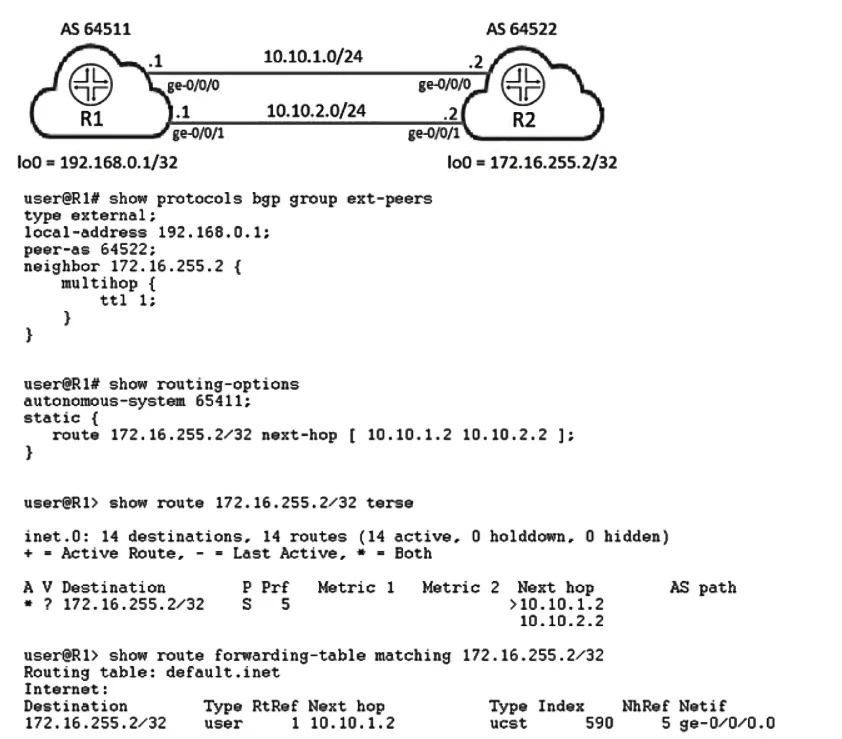
Options
- ABoth the next hops will be used to forward traffic to R2.
- BA routing policy will be required to forward traffic to both next hops.
- CThe TTL value of 1 is set to limit the scope of the EBGP session.
- DThe ttl statement must be configured to accommodate peering to a loopback address of a directly
How the community answered
(58 responses)- A5% (3)
- B84% (49)
- D10% (6)
Explanation
B - Because only one next hop in forwarding table. C- Becuse TTL=1 limiting bgp connection to be established only over loopbacks interface. Use the multihop statement to alter the default use of the neighbor's physical address. In addition, you can also specify a time-to-live (TTL) value in the BGP packets to control how far they propagate. We use a TTL value of 1 to ensure that the session cannot be established across any other backdoor links in the network.
Topics
Community Discussion
No community discussion yet for this question.