
JN0-637 · Question #44
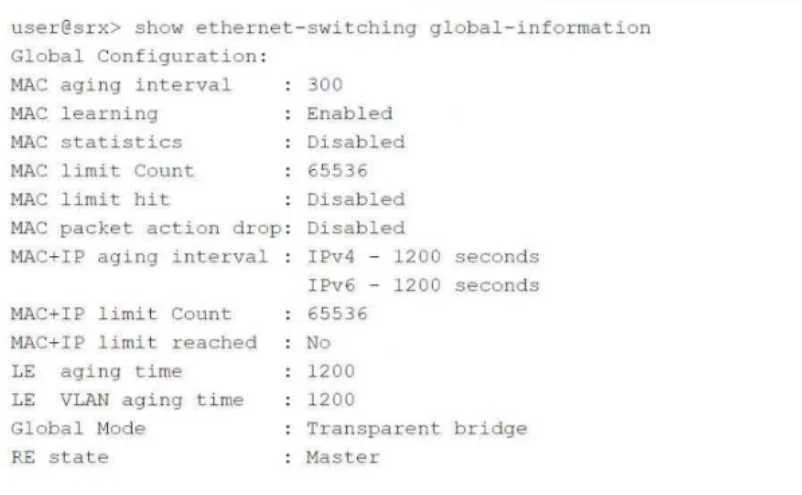
Referring to the exhibit, which two statements are correct? (Choose two.)
The correct answer is A. You cannot secure intra-VLAN traffic with a security policy on this device. D. The device cannot pass Layer 2 and Layer 3 traffic at the same time. Based on the output from the command show ethernet-switching global-information, the key line Global Mode : Transparent bridge This indicates that the Juniper SRX device is operating in transparent mode, meaning it is functioning as a Layer 2 bridge and not performing Layer 3…
Question
Referring to the exhibit, which two statements are correct? (Choose two.)
Exhibit
Options
- AYou cannot secure intra-VLAN traffic with a security policy on this device.
- BYou can secure inter-VLAN traffic with a security policy on this device.
- CThe device can pass Layer 2 and Layer 3 traffic at the same time.
- DThe device cannot pass Layer 2 and Layer 3 traffic at the same time.
How the community answered
(32 responses)- A75% (24)
- B9% (3)
- C16% (5)
Explanation
Based on the output from the command show ethernet-switching global-information, the key line Global Mode : Transparent bridge This indicates that the Juniper SRX device is operating in transparent mode, meaning it is functioning as a Layer 2 bridge and not performing Layer 3 routing by default. In this mode: Traffic is switched (bridged) between interfaces, like a switch. The device does not perform Layer 3 routing unless you explicitly configure routed interfaces or place it in mixed mode. Option A - In transparent mode, intra-VLAN traffic is not subject to security policies because it's simply bridged and not routed through the firewall engine. Option D - In transparent mode, the device operates purely at Layer 2. It can't perform Layer 3 routing unless configured in mixed mode. The exhibit does not indicate mixed mode is active.
Topics
Community Discussion
No community discussion yet for this question.