
Juniper
JN0-363 · Question #34
JN0-363 Question #34: Real Exam Question with Answer & Explanation
Sign in or unlock JN0-363 to reveal the answer and full explanation for question #34. The question stem and answer options stay visible for context.
Question
Referring to the exhibit, internal BGP between R1 and R2 is not establishing. What is the problem In this scenario?
Exhibit
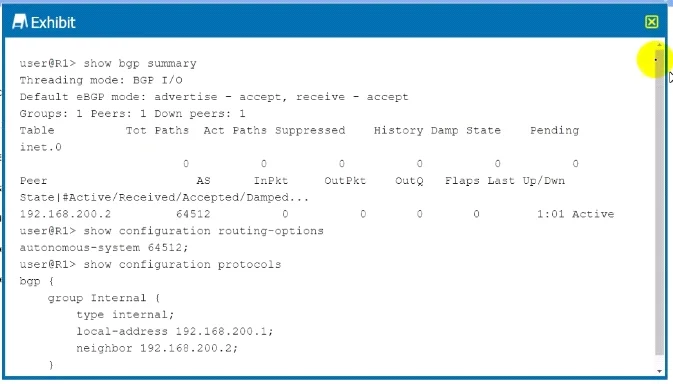
Options
- AR1 does not have a route to 192.168.200.2.
- BR1 and R2 must each have unique AS numbers.
- CR1 needs to be configured with an explicit router ID.
- DR1 needs to be configured with a next-hop self policy.
Unlock JN0-363 to see the answer
You've previewed enough free JN0-363 questions. Unlock JN0-363 for full answers, explanations, the timed quiz mode, progress tracking, and the master PDF. Question stem and options stay visible so you can still see what's on the exam.