
HP
HPE6-A78 · Question #65
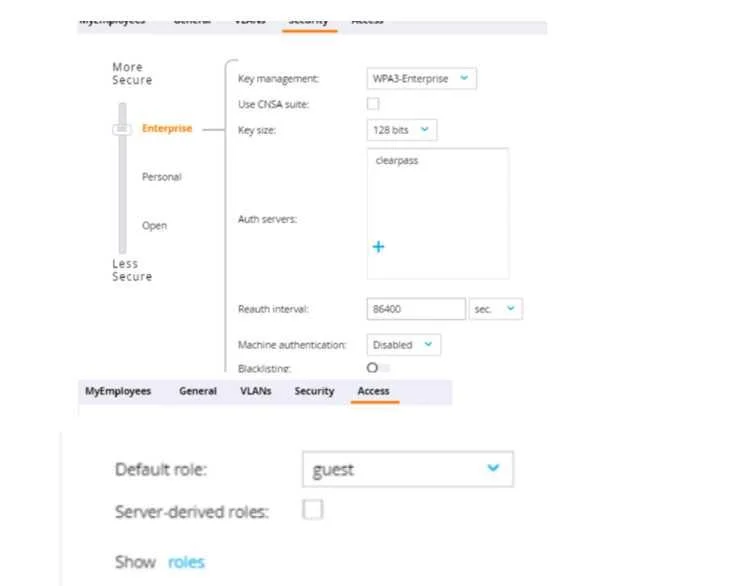
The first exhibit shows roles on the MC, listed in alphabetic order. The second and third exhibits show the configuration for a WLAN to which a client connects. Which description of the role…
Sign in or unlock HPE6-A78 to reveal the answer and full explanation for question #65. The question stem and answer options stay visible for context.
Implementing and Configuring Aruba Network Security
Question
The first exhibit shows roles on the MC, listed in alphabetic order. The second and third exhibits show the configuration for a WLAN to which a client connects. Which description of the role assigned to a user under various circumstances is correct?
Exhibit
Options
- AA user fails 802.1X authentication. The client remains connected, but is assigned the "guest" role.
- BA user authenticates successfully with 802.1 X. and the RADIUS Access-Accept includes an
- CA user authenticates successfully with 802.1X. and the RADIUS Access-Accept includes an
- DA user authenticates successfully with 802.1X, and the RADIUS Access-Accept includes an
Unlock HPE6-A78 to see the answer
You've previewed enough free HPE6-A78 questions. Unlock HPE6-A78 for full answers, explanations, the timed quiz mode, progress tracking, and the master PDF. Question stem and options stay visible so you can still see what's on the exam.
Topics
#802.1X#role assignment#RADIUS VSA#WLAN policy