
HPE2-W09 · Question #23
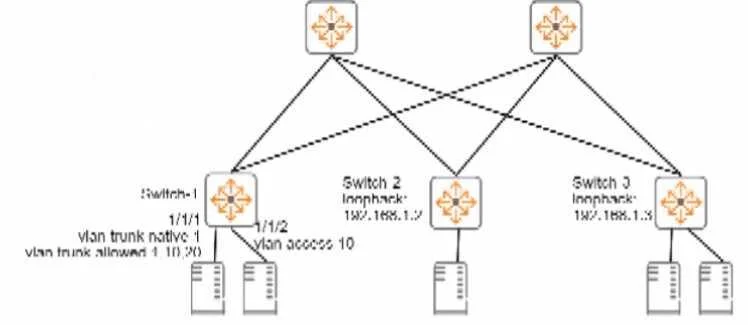
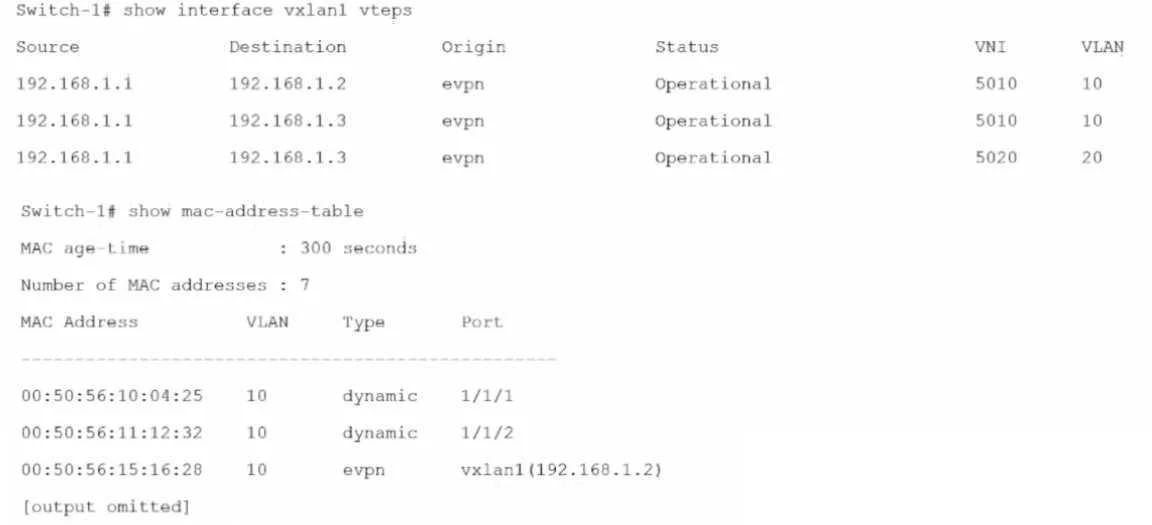
Refer to the exhibits. Is this how the switch handles the traffic? Solution: A frame with destination MAC address, 00:50:56:15:16:28, arrives with a VLAN 10 tag on 1/1/1 on Switch-1. Switch-1…
The correct answer is A. Yes. A frame with destination MAC address, 00:50:56:15:16:28, arrives with a VLAN 10 tag on 1/1/1 on Switch-1. Switch-1 encapsulates the frame with VXLAN and an IP header destined to 192.168.1.2 is a correct explanation of how the switch handles the traffic. Switch-1, Switch-2, and…
Question
Refer to the exhibits. Is this how the switch handles the traffic? Solution: A frame with destination MAC address, 00:50:56:15:16:28, arrives with a VLAN 10 tag on 1/1/1 on Switch-1. Switch-1 encapsulates the frame with VXLAN and an IP header destined to 192.168.1.2.
Exhibits
Options
- AYes
- BNo
How the community answered
(61 responses)- A75% (46)
- B25% (15)
Explanation
A frame with destination MAC address, 00:50:56:15:16:28, arrives with a VLAN 10 tag on 1/1/1 on Switch-1. Switch-1 encapsulates the frame with VXLAN and an IP header destined to 192.168.1.2 is a correct explanation of how the switch handles the traffic. Switch-1, Switch-2, and Switch-3 are ArubaOS-CX switches that use VXLAN and EVPN to provide Layer 2 extension over Layer 3 networks. VXLAN is a feature that uses UDP encapsulation to tunnel Layer 2 frames over Layer 3 networks using VNIs. EVPN is a feature that uses BGP to advertise MAC and IP addresses of hosts connected to VTEPs. Switch-1 receives a frame with destination MAC address, 00:50:56:15:16:28, which belongs to VM-2 on Switch-3. Switch-1 learns from EVPN that VM-2 is reachable through VTEP 192.168.1.2, which is Switch-3's loopback interface. Switch-1 encapsulates the frame with VXLAN and an IP header destined to 192.168.1.2 and sends it over the underlay network.
Topics
Community Discussion
No community discussion yet for this question.