
H12-891_V1.0 · Question #497
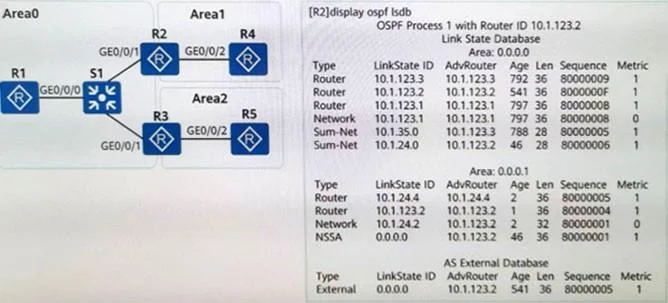
A certain campus deploys the OSPF protocol to achieve network interoperability. The LSDB information of R2 is as shown in the figure. Which of the following information derived from this LSDB is…
The correct answer is A. Area1 is the NSSA area B. R2 delivers the default route within the OSPF process. A is correct because Type 7 LSAs visible in R2's LSDB are the definitive marker of an NSSA area - Type 7 (NSSA External LSAs) exist only in NSSA areas, generated by ASBRs to advertise external routes without flooding Type 5 LSAs into the area. B is correct because in NSSA, the…
Question
A certain campus deploys the OSPF protocol to achieve network interoperability. The LSDB information of R2 is as shown in the figure. Which of the following information derived from this LSDB is correct? (Multiple choice)
Exhibit
Options
- AArea1 is the NSSA area
- BR2 delivers the default route within the OSPF process.
- CR2 converts the default route of Type7 LSA into the default route of Type5 LSA
- DThere is no Type3 LSA in Area1. It may be that R2 filters Type3 LSA in the outbound direction of
How the community answered
(41 responses)- A73% (30)
- C10% (4)
- D17% (7)
Explanation
A is correct because Type 7 LSAs visible in R2's LSDB are the definitive marker of an NSSA area - Type 7 (NSSA External LSAs) exist only in NSSA areas, generated by ASBRs to advertise external routes without flooding Type 5 LSAs into the area. B is correct because in NSSA, the ABR (R2) itself generates a Type 7 default LSA (0.0.0.0/0) to give NSSA routers a path to external destinations - this is R2 originating a default route within the OSPF process.
C is wrong because the Type 7 default route (0.0.0.0/0) that R2 itself generates as ABR is not subject to Type 7→Type 5 conversion; that conversion only applies to Type 7 LSAs originated by ASBRs inside the NSSA for non-default external prefixes. D is wrong because NSSA areas are not prohibited from carrying Type 3 LSAs (only Type 5 is blocked) - attributing absent Type 3 LSAs to outbound filtering is speculative, and the more likely cause would be a Totally NSSA configuration, which D does not mention.
Memory tip: Think "NSSA = No Type 5, but Type 7 inside → Type 5 outside" - the ABR converts ASBR-originated Type 7s to Type 5, but the ABR's own default route stays Type 7 and never crosses that boundary.
Topics
Community Discussion
No community discussion yet for this question.