
Huawei
H12-891_V1.0 · Question #339
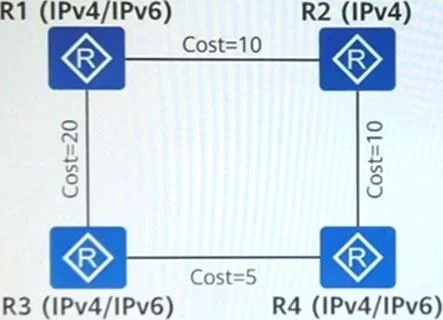
ISIS is a link state protocol that uses the SPF algorithm for route calculation. As shown in the figure, a campus network deploys both IPV4 and IPV6 and runs the ISIS protocol to achieve network…
The correct answer is D. By default, in the shortest path tree formed by IPV6 network calculation, the path for R1 to access. See the full explanation below for the reasoning.
Advanced IP Routing and Multicast
Question
ISIS is a link state protocol that uses the SPF algorithm for route calculation. As shown in the figure, a campus network deploys both IPV4 and IPV6 and runs the ISIS protocol to achieve network interoperability. R2 only supports IPV4. Which of the following descriptions of topological calculations is correct?
Exhibit
Options
- ABy default, IPV4 and IPV6 networks will be calculated separately to form different shortest path
- BBy default, since R2 does not support IPV6, in the shortest path tree formed by IPV6 network
- CIf you want IPV4 and IPV6 network calculations to form the same shortest path tree, you need to
- DBy default, in the shortest path tree formed by IPV6 network calculation, the path for R1 to access
How the community answered
(31 responses)- A6% (2)
- B6% (2)
- C16% (5)
- D71% (22)
Topics
#ISIS#IPv4 IPv6 dual stack#SPF algorithm#topology calculation
Community Discussion
No community discussion yet for this question.