
H12-725_V4.0 · Question #43
As shown in the figure, which one of the following descriptions of dual-machine hot standby based on transparent mode is incorrect?
The correct answer is C. It is recommended that this network work in load sharing mode to share user traffic. Option C is the incorrect statement because dual-machine hot standby in transparent mode is specifically designed for active-standby (not load sharing) operation. Load sharing requires both devices to actively process traffic simultaneously, but transparent (Layer 2 bridge)…
Question
As shown in the figure, which one of the following descriptions of dual-machine hot standby based on transparent mode is incorrect?
Exhibit
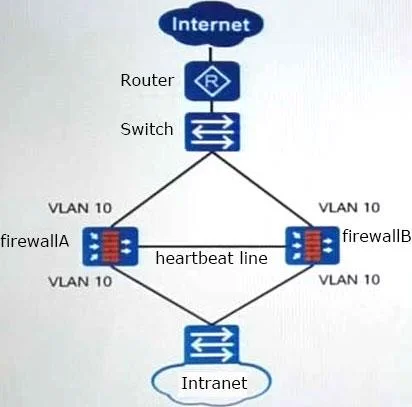
Options
- ASince the service interface of the firewall works on the second layer, it cannot run services related
- BIn this network, the firewall is transparently connected to the original switch network without
- CIt is recommended that this network work in load sharing mode to share user traffic
- DBy default, the status of any VLAN will not be adjusted based on the VGMP group status.
How the community answered
(18 responses)- A11% (2)
- C83% (15)
- D6% (1)
Explanation
Option C is the incorrect statement because dual-machine hot standby in transparent mode is specifically designed for active-standby (not load sharing) operation. Load sharing requires both devices to actively process traffic simultaneously, but transparent (Layer 2 bridge) mode creates risks of asymmetric traffic flows and potential Layer 2 loops - making active-standby the recommended and safer approach.
Why the distractors are correct statements (and thus not the answer):
- A is accurate: Layer 2 transparent interfaces lack IP addresses, so Layer 3-dependent services (like routing protocols) cannot run on them.
- B is accurate: transparent mode's core benefit is that the firewall inserts into the network without requiring IP reconfiguration of surrounding devices.
- D is accurate: VGMP (the HA management protocol) does not automatically adjust VLAN states by default - this must be explicitly configured.
Memory tip: "Hot Standby = One Hot, One Cold." The word standby in the feature name itself tells you the design intent - one device is active, the other waits. Load sharing is the opposite of standby, so recommending it contradicts the entire paradigm.
Topics
Community Discussion
No community discussion yet for this question.