
H12-725_V4.0 · Question #112
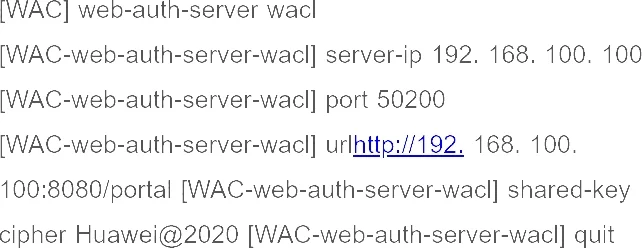
As shown in the figure below, the administrator has performed the configuration related to Protall authentication on the network access device. Which of the following authentication protocols does…
The correct answer is C. Portal. Option C is correct because "Portal authentication" is named after the Portal protocol itself - it is the specific authentication mechanism used when network access devices redirect unauthenticated users to a web-based login page, where the Portal protocol governs the…
Question
As shown in the figure below, the administrator has performed the configuration related to Protall authentication on the network access device. Which of the following authentication protocols does the administrator use in Protall authentication?
Exhibit
Options
- ACHAP
- BHTTP/HTTPS
- CPortal
- DPAP
How the community answered
(39 responses)- A8% (3)
- B5% (2)
- C74% (29)
- D13% (5)
Explanation
Option C is correct because "Portal authentication" is named after the Portal protocol itself - it is the specific authentication mechanism used when network access devices redirect unauthenticated users to a web-based login page, where the Portal protocol governs the communication between the access device, Portal server, and authentication server.
Why the distractors are wrong:
- A (CHAP) - Challenge Handshake Authentication Protocol is used in PPP/dial-up connections, not Portal-based network access control.
- B (HTTP/HTTPS) - These are transport protocols that carry the portal web page to the user's browser, but they are not the authentication protocol itself.
- D (PAP) - Password Authentication Protocol is also a PPP protocol that sends credentials in plaintext; it is not used in Portal authentication flows.
Memory tip: The question contains the answer - "Portal authentication" uses the Portal protocol. When you see "Portal authentication," think of it as a self-describing term: the protocol and the method share the same name, just like "RADIUS authentication" uses RADIUS.
Topics
Community Discussion
No community discussion yet for this question.