
GCIH · Question #690
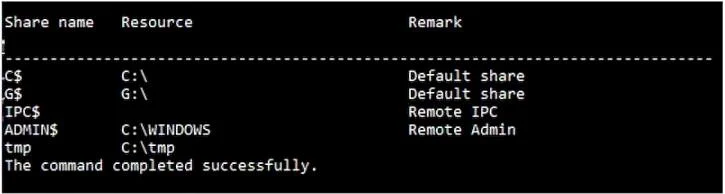
Examine the image below. What share would a user typically connect to when they execute the NET USE command below? C:\> net use \\10.0.10.123
The correct answer is C. IPC$. When NET USE is executed against a remote host without specifying a share name, Windows automatically connects to the IPC$ (Inter-Process Communication) hidden share by default.
Question
Examine the image below. What share would a user typically connect to when they execute the NET USE command below? C:> net use \10.0.10.123
Exhibit
Options
- AC$
- Btmp
- CIPC$
- DADMIN$
How the community answered
(47 responses)- A2% (1)
- B4% (2)
- C94% (44)
Why each option
When NET USE is executed against a remote host without specifying a share name, Windows automatically connects to the IPC$ (Inter-Process Communication) hidden share by default.
C$ is the default administrative share for the root of the C: drive and must be explicitly specified in the command (e.g., net use \\server\C$) - it is not connected to automatically.
tmp is not a default Windows administrative share and would only exist if manually created on the target, requiring explicit naming in the NET USE command.
IPC$ is a special hidden administrative share present on all Windows systems that facilitates named pipe communication and inter-process communication over the network. When 'net use \\<target>' is run without an explicit share path, Windows establishes a session against IPC$, which is also commonly leveraged during null session enumeration to query user accounts, groups, shares, and other system information prior to accessing other resources.
ADMIN$ is an administrative share mapping to the Windows system directory (%SystemRoot%) and must also be explicitly named in the NET USE command to be accessed.
Concept tested: Default IPC$ share connection via NET USE command
Source: https://learn.microsoft.com/en-us/troubleshoot/windows-server/networking/inter-process-communication-share-null-session
Topics
Community Discussion
No community discussion yet for this question.