
FCSS_SASE_AD-23 · Question #44
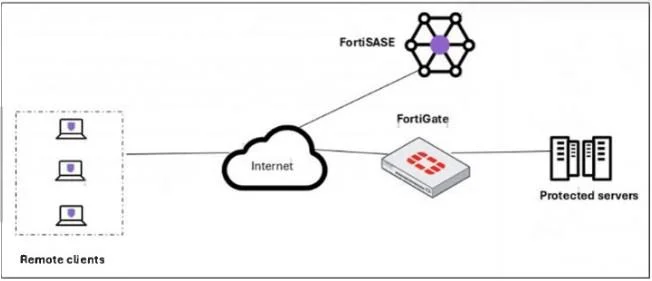
Refer to the exhibit. A customer needs to implement device posture checks for their remote endpoints while accessing the protected server. They also want the TCP traffic between the remote endpoints…
The correct answer is A. Sync ZTNA tags from FortiSASE to FortiGate. C. Configure private access policies on FortiSASE with ZTNA. E. Configure FortiGate as a zero trust network access (ZTNA) access proxy. FortiSASE performs posture checks and applies ZTNA tags. These must be synced to FortiGate so FortiGate can make decisions based on them. Configuring private access policies on FortiSASE with ZTNA allows FortiSASE to enforce access rules (like posture checks) before allowing…
Question
Refer to the exhibit. A customer needs to implement device posture checks for their remote endpoints while accessing the protected server. They also want the TCP traffic between the remote endpoints and the protected servers to be processed by FortiGate. In this scenario, which three setups will achieve the above requirements? (Choose three.)
Exhibit
Options
- ASync ZTNA tags from FortiSASE to FortiGate.
- BConfigure ZTNA tags on FortiGate.
- CConfigure private access policies on FortiSASE with ZTNA.
- DConfigure ZTNA servers and ZTNA policies on FortiGate.
- EConfigure FortiGate as a zero trust network access (ZTNA) access proxy.
How the community answered
(32 responses)- A75% (24)
- B16% (5)
- D9% (3)
Explanation
FortiSASE performs posture checks and applies ZTNA tags. These must be synced to FortiGate so FortiGate can make decisions based on them. Configuring private access policies on FortiSASE with ZTNA allows FortiSASE to enforce access rules (like posture checks) before allowing users to reach internal resources. The FortiGate acts as the access proxy for internal protected servers, allowing inspection of TCP traffic from remote users.
Topics
Community Discussion
No community discussion yet for this question.