
FCP_ZCS_AD-7.4 · Question #10
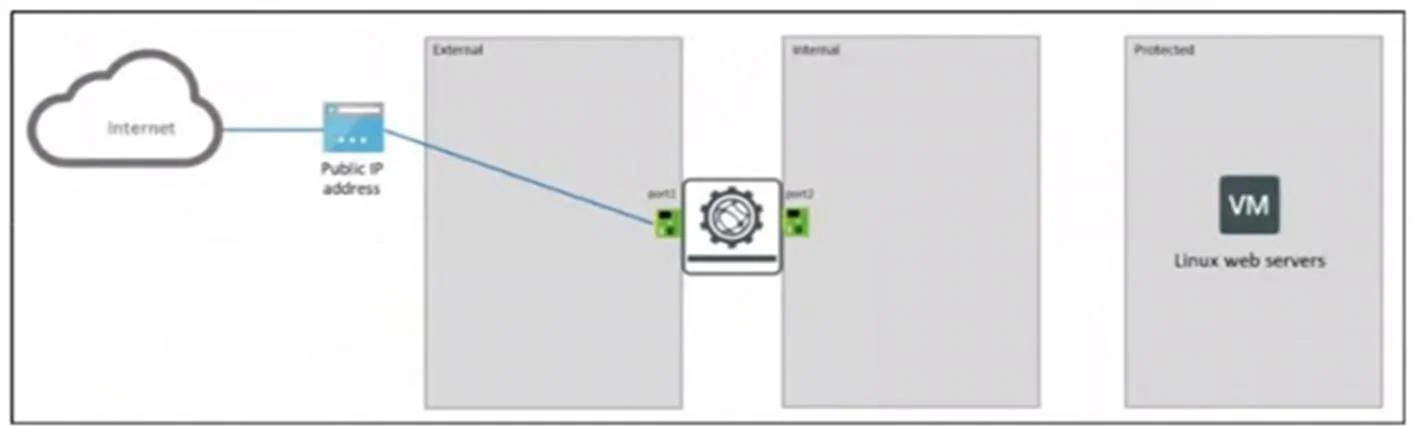
Refer to the exhibit. Your company runs front-end web servers in Azure. You need to deploy a Linux VM to be used as a web server. To protect your web servers with a web application firewall (WAF)…
The correct answer is A. Reverse proxy. The Reverse Proxy mode is the most appropriate FortiWeb operation mode for this scenario. In this mode, FortiWeb sits between internet users and the Linux web servers, terminating client connections and then forwarding requests to the backend servers. This enables deep…
Question
Refer to the exhibit. Your company runs front-end web servers in Azure. You need to deploy a Linux VM to be used as a web server. To protect your web servers with a web application firewall (WAF), you deploy FortiWeb to secure applications from web-based attacks. Which FortiWeb operation mode can you implement for this scenario?
Exhibit
Options
- AReverse proxy
- BTrue transparent proxy
- CPassive monitoring
- DTransparent inspection
How the community answered
(37 responses)- A73% (27)
- B14% (5)
- C5% (2)
- D8% (3)
Explanation
The Reverse Proxy mode is the most appropriate FortiWeb operation mode for this scenario. In this mode, FortiWeb sits between internet users and the Linux web servers, terminating client connections and then forwarding requests to the backend servers. This enables deep inspection, protection from web attacks (like SQL injection and XSS), and full WAF functionality, making it ideal for securing front-end web servers exposed to the internet.
Topics
Community Discussion
No community discussion yet for this question.