
DP-700 · Question #34
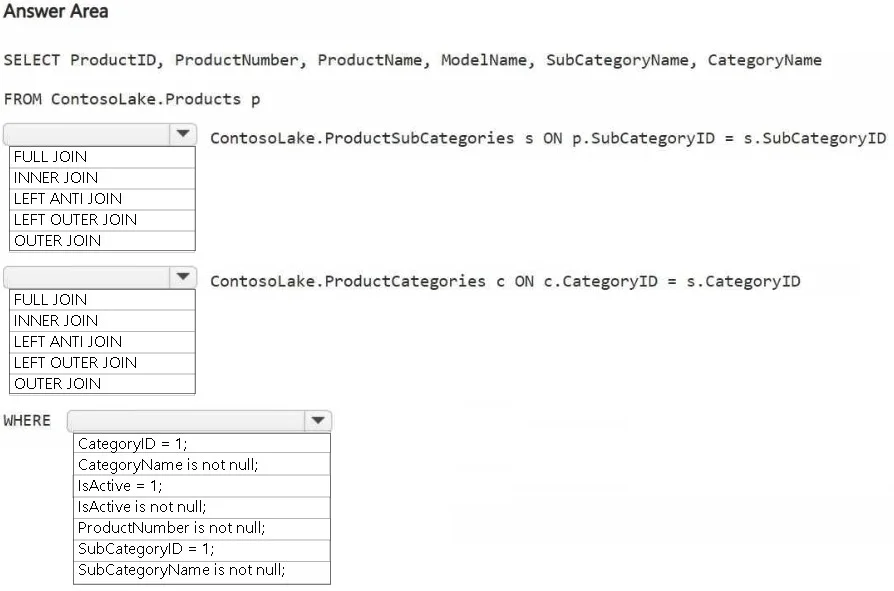
You have a KQL database that contains two tables named Stream and Reference. Stream contains streaming data in the following format: Column name Data type Timestamp Datetime Geolocation Dynamic…
The correct answer is B. No. Adding the make_list() function to the KQL queryset, especially before a render scatterchart operation, is unlikely to reduce runtime as it implies an aggregation that would alter the data structure required for a point-based chart and potentially add processing overhead.
Question
Exhibit
Options
- AYes
- BNo
How the community answered
(46 responses)- A28% (13)
- B72% (33)
Why each option
Adding the make_list() function to the KQL queryset, especially before a render scatterchart operation, is unlikely to reduce runtime as it implies an aggregation that would alter the data structure required for a point-based chart and potentially add processing overhead.
Adding an aggregation function like make_list() before a scatterchart render usually changes the granularity of the data or adds processing overhead for grouping, which is not conducive to reducing runtime for a point-based visualization.
The make_list() function is an aggregation function that creates a dynamic array of values, typically used within a summarize operator to group and aggregate data. Introducing an aggregation like make_list() into this query, which is designed to plot individual points on a scatter chart, would fundamentally alter the data structure. This change would likely either break the render scatterchart operation or introduce additional processing complexity for aggregation, thus not reducing and possibly increasing runtime.
Concept tested: KQL aggregation functions and query optimization for visualization
Source: https://learn.microsoft.com/en-us/azure/data-explorer/kusto/query/makelist-aggfunction
Topics
Community Discussion
No community discussion yet for this question.