
DP-300 · Question #230
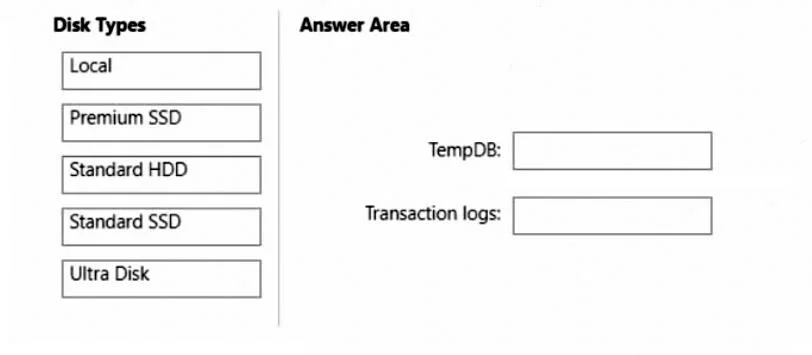
Drag and Drop Question You have an Azure subscription. You plan to deploy a new Azure virtual machine that will host a Microsoft SQL Server instance. You need to configure the disks on the virtual…
The correct answer is TempDB: Local; Transaction logs: Ultra Disk. TempDB benefits from Local (ephemeral) disk storage because it is a temporary workspace that doesn't need persistence, and local NVMe/SSD storage on the VM host provides the lowest possible latency with no network overhead, minimizing IO impact on the VM's managed disk…
Question
Exhibits
Answer Area
Drag items
Correct arrangement
- TempDB: Local
- Transaction logs: Ultra Disk
Explanation
TempDB benefits from Local (ephemeral) disk storage because it is a temporary workspace that doesn't need persistence, and local NVMe/SSD storage on the VM host provides the lowest possible latency with no network overhead, minimizing IO impact on the VM's managed disk bandwidth. Ultra Disk is the optimal choice for transaction logs because it offers the lowest latency, highest IOPS, and configurable throughput among Azure managed disk types, which is critical for write-heavy, latency-sensitive transaction log workloads that directly impact SQL Server performance and recovery point objectives.
Topics
Community Discussion
No community discussion yet for this question.