
DA0-001 · Question #47
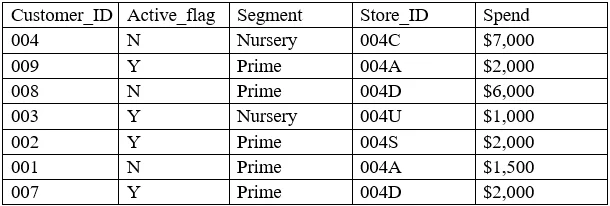
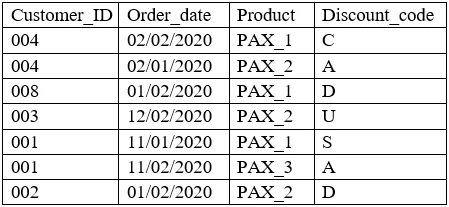
Given the following customer and order tables: Which of the following describes the number of rows and columns of data that would be present after performing an INNER JOIN of the tables?
The correct answer is A. Five rows, eight columns. Inner join returns only the rows where there is a match between the two tables in the specified join condition. In this case, the join condition would be based on the "Customer ID" column, which is present in both tables. So, the inner join of the two tables would result in 5…
Question
Given the following customer and order tables:
Which of the following describes the number of rows and columns of data that would be present after performing an INNER JOIN of the tables?
Exhibits
Options
- AFive rows, eight columns
- BSeven rows, eight columns
- CEight rows, seven columns
- DNine rows, five columns
How the community answered
(27 responses)- A85% (23)
- B4% (1)
- C4% (1)
- D7% (2)
Explanation
Inner join returns only the rows where there is a match between the two tables in the specified join condition. In this case, the join condition would be based on the "Customer ID" column, which is present in both tables. So, the inner join of the two tables would result in 5 rows where there is a match in the "Customer ID" column, and each row would have 8 columns (all columns from
Topics
Community Discussion
No community discussion yet for this question.