
CV0-003 · Question #673
After announcing a big sales promotion, an e-commerce company starts to experience a slow response on its platform that is hosted in a public cloud. When checking the resources involved, the systems…
The correct answer is A. Spin up a new web server. During a traffic spike, the web server tier is the first bottleneck because it handles all incoming HTTP/S requests; horizontal scaling by adding another web server is the fastest cloud-native remedy.
Question
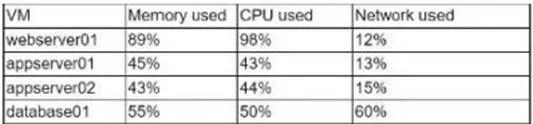
After announcing a big sales promotion, an e-commerce company starts to experience a slow response on its platform that is hosted in a public cloud. When checking the resources involved, the systems administrator sees the following consumption:
Considering all VMs were built from the same templates, which of the following actions should the administrator perform FIRST to speed up the response of the e-commerce platform?
Exhibit
Options
- ASpin up a new web server
- BSpin up a new application server
- CAdd more memory to the web server
- DSpin up a new database server
How the community answered
(24 responses)- A71% (17)
- B4% (1)
- C17% (4)
- D8% (2)
Why each option
During a traffic spike, the web server tier is the first bottleneck because it handles all incoming HTTP/S requests; horizontal scaling by adding another web server is the fastest cloud-native remedy.
The web server is the entry point for all user requests and, given equal VM templates, the tier with the highest CPU or network saturation during a promotional traffic surge is the web layer. Spinning up an additional web server and distributing traffic through a load balancer is the standard cloud horizontal-scaling response. This is prioritized before touching downstream tiers because relieving the front-end bottleneck is required before any application or database bottleneck becomes visible.
Application servers only become a bottleneck after the web tier successfully passes traffic through; they are not the first layer overwhelmed by increased external HTTP requests.
Adding memory is vertical scaling, which is slower to provision, does not distribute request load across instances, and is the less preferred approach in cloud architectures compared to horizontal scaling.
Database servers handle backend query processing and would only surface as a bottleneck once the web and application tiers are already processing requests successfully, making them a lower-priority target.
Concept tested: Horizontal scaling web tier in cloud environments
Source: https://learn.microsoft.com/en-us/azure/architecture/best-practices/auto-scaling
Topics
Community Discussion
No community discussion yet for this question.