
CV0-003 · Question #545
SIMULATION 1 A company has decided to scale its e-commerce application from its corporate datacenter to a commercial cloud provider to meet an anticipated increase in demand during an upcoming…
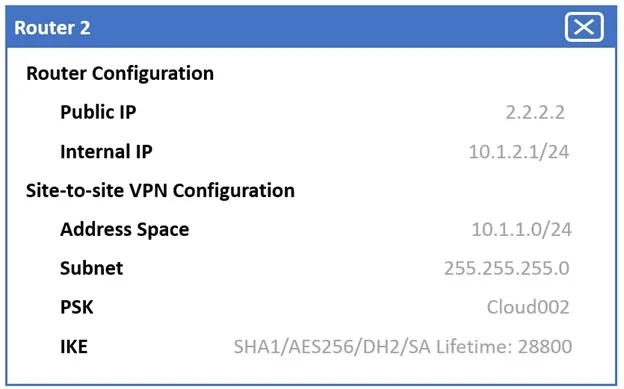
The correct answer is A. Update the PSK (Pre-shared key) in Router 2. D. Change the Address Space on Router 2. For a site-to-site IPSec tunnel to operate correctly, the pre-shared key and the address space must be accurately configured on both VPN endpoints.
Question
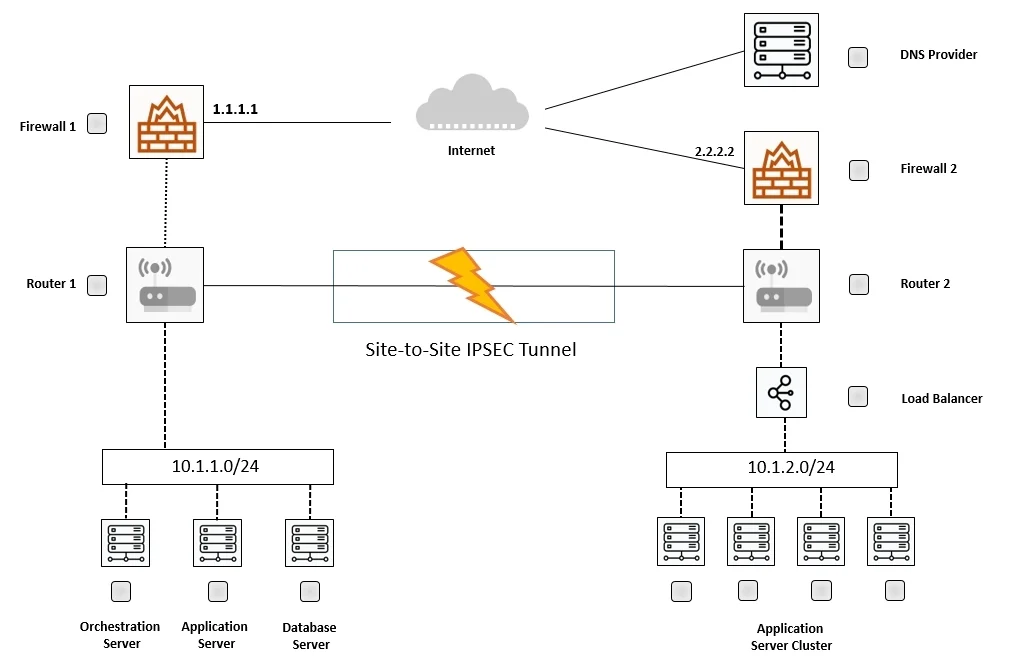
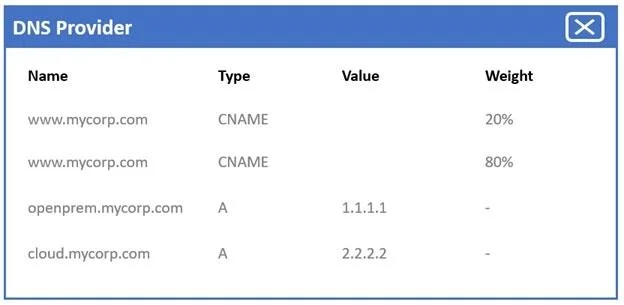
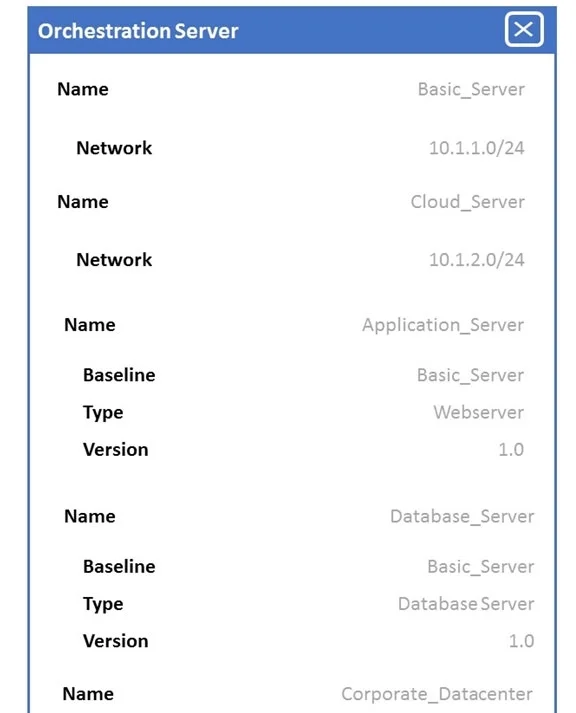
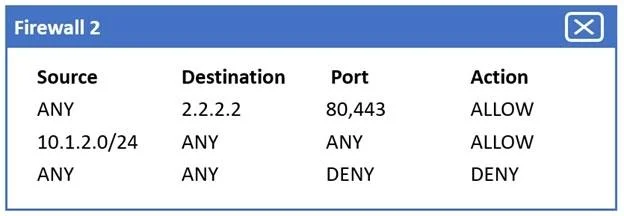
SIMULATION 1 A company has decided to scale its e-commerce application from its corporate datacenter to a commercial cloud provider to meet an anticipated increase in demand during an upcoming holiday. The majority of the application load takes place on the application server under normal conditions. For this reason, the company decides to deploy additional application servers into a commercial cloud provider using the on-premises orchestration engine that installs and configures common software and network configurations. The remote computing environment is connected to the on-premises datacenter via a site-to-site IPSec tunnel. The external DNS provider has been configured to use weighted round-robin routing to load balance connections from the Internet. During testing, the company discovers that only 20% of connections completed successfully. INSTRUCTIONS Review the network architecture and supporting documents and fulfill these requirements:
Part 1:
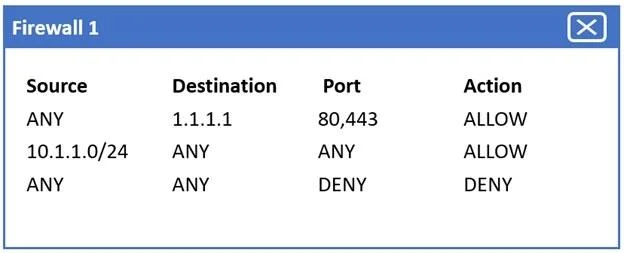
- Analyze the configuration of the following components: DNS, Firewall 1, Firewall 2, Router
Router 2, VPN and Orchestrator Server.
- Identify the problematic device(s).
Part 2:
- Identify the correct options to provide adequate configuration for hybrid cloud architecture.
If at any time you would like to bring back the initial state of the simulation, please click the Reset All button. Part 1:
Cloud Hybrid Network Diagram Part 2:
Only select a maximum of TWO options from the multiple choice question. (Choose two.)
Exhibits
Options
- AUpdate the PSK (Pre-shared key) in Router 2.
- BUpdate the A record on the DNS from 2.2.2.2 to 1.1.1.1.
- CPromote deny All to allow All in Firewall 1 and Firewall 2.
- DChange the Address Space on Router 2.
- EChange internal IP Address of Router 1.
- FReverse the Weight property in the two CNAME records on the DNS.
- GAdd the Application Server at on-premises to the Load Balancer.
How the community answered
(47 responses)- A51% (24)
- B6% (3)
- C4% (2)
- E11% (5)
- F26% (12)
- G2% (1)
Why each option
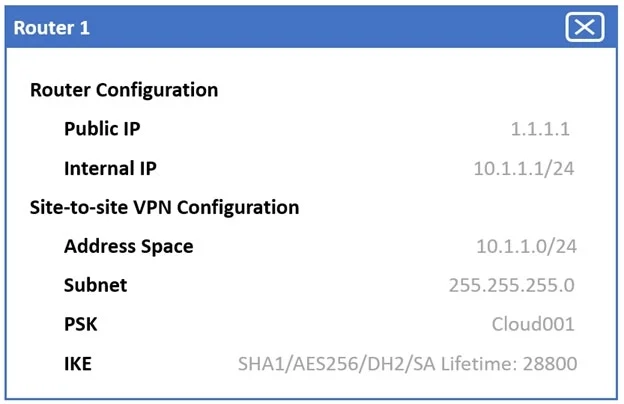
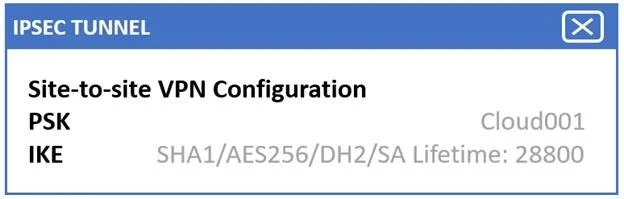
For a site-to-site IPSec tunnel to operate correctly, the pre-shared key and the address space must be accurately configured on both VPN endpoints.
The PSK must be identical on both VPN peers for IKE authentication to succeed; a mismatched PSK on Router 2 would cause the IPSec tunnel negotiation to fail, blocking all traffic between on-premises and the cloud.
Updating the DNS A record changes where Internet clients are directed but does not resolve VPN connectivity issues between on-premises and the cloud.
Replacing a deny-all rule with allow-all on both firewalls would eliminate the security posture entirely and is not an appropriate fix for a VPN misconfiguration.
The address space configured on Router 2 must correctly identify the remote network subnets; an incorrect or overlapping address space causes routing failures over the tunnel, preventing traffic from reaching cloud-hosted application servers.
Changing the internal IP of Router 1 is not indicated as a misconfiguration and would disrupt existing on-premises routing without fixing the IPSec tunnel.
Reversing CNAME record weights only redistributes DNS-based traffic ratios and does not address any VPN or routing misconfiguration.
Adding the on-premises application server to the cloud load balancer does not resolve the underlying IPSec tunnel or routing misconfiguration.
Concept tested: Site-to-site IPSec VPN - PSK and address space configuration
Source: https://learn.microsoft.com/en-us/azure/vpn-gateway/vpn-gateway-about-vpn-devices
Topics
Community Discussion
No community discussion yet for this question.