
CV0-003 · Question #201
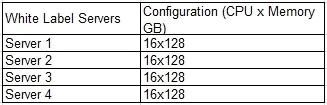
A company has deployed a four-node cluster in a COLO environment with server configurations listed below. The company wants to ensure there is 50% overhead for failover and redundancy. There are…
The correct answer is B. Ensure dynamic resource allocation is being utilized. The goal is to better utilize cluster resources while maintaining 50% overhead for failover. Dynamic resource allocation (such as VMware DRS - Distributed Resource Scheduler) allows the cluster to automatically monitor VM resource consumption and reallocate vCPUs and memory…
Question
A company has deployed a four-node cluster in a COLO environment with server configurations listed below. The company wants to ensure there is 50% overhead for failover and redundancy. There are currently eight VMs running within the cluster with four vCPUs x32GB each. The company wants to better utilize its resources within the cluster without compromising failover and redundancy. Given the information above, which of the following should a cloud administrator do to BEST accommodate failover and redundancy requirements?
Exhibit
Options
- AEnsure hyperthreading is being utilized with physical server CPUs.
- BEnsure dynamic resource allocation is being utilized.
- COvercommit memory, and the systems will allocate resources as required.
- DSet hard limits for VM resources and turn on hyperthreading.
How the community answered
(28 responses)- A21% (6)
- B64% (18)
- C11% (3)
- D4% (1)
Explanation
The goal is to better utilize cluster resources while maintaining 50% overhead for failover. Dynamic resource allocation (such as VMware DRS - Distributed Resource Scheduler) allows the cluster to automatically monitor VM resource consumption and reallocate vCPUs and memory across nodes in real time based on actual demand rather than statically reserved maximums. This means idle or underutilized resources can be freed for other VMs, improving overall utilization without permanently over-allocating resources in a way that would compromise failover capacity. Option A (hyperthreading) increases logical CPU count but does not dynamically manage resource distribution - it alone does not ensure headroom is preserved. Option C (overcommitting memory) is risky: if VMs simultaneously demand their full memory allocation, the host must use techniques like ballooning or swapping, which can severely degrade performance and undermine failover reliability. Option D (hard limits + hyperthreading) restricts VMs to fixed maximums, which wastes resources when VMs run below their limits and does not adaptively balance load across the cluster.
Topics
Community Discussion
No community discussion yet for this question.