
CTAL-TA_SYLL2019 · Question #53
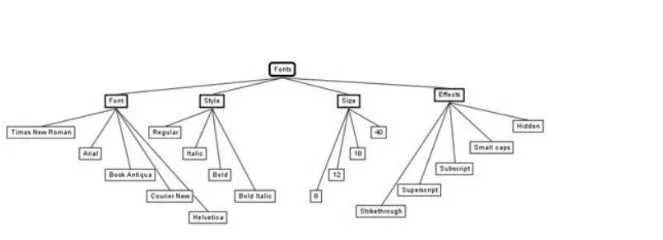
You are building tests using the classification tree below. You have been told that pairwise testing would be a good approach to this problem. When you apply the pairwise testing technique what…
The correct answer is A. Pairwise testing will require fewer test cases than exhaustive testing. Pairwise testing is a technique that reduces the number of test cases by testing only pairs of values for each data item, instead of testing all possible combinations. Pairwise testing is based on the assumption that most defects are caused by interactions of at most two…
Question
You are building tests using the classification tree below. You have been told that pairwise testing would be a good approach to this problem. When you apply the pairwise testing technique what would be the expected effect on the number of test cases?
Exhibit
Options
- APairwise testing will require fewer test cases than exhaustive testing
- BPairwise testing will have no effect on the number of test cases
- CPairwise testing would not be applicable for this problem
- DPairwise testing would not be possible because equivalence partitions have not been defined
How the community answered
(38 responses)- A76% (29)
- B16% (6)
- C3% (1)
- D5% (2)
Explanation
Pairwise testing is a technique that reduces the number of test cases by testing only pairs of values for each data item, instead of testing all possible combinations. Pairwise testing is based on the assumption that most defects are caused by interactions of at most two factors. Pairwise testing can be applied to this problem using the classification tree, which shows the data items and their values. By using pairwise testing, the number of test cases will be lower than exhaustive testing, which would require testing every combination of values for each data item. Reference = ISTQB Certified Tester Advanced Level Syllabus Technical Test Analyst1, page 2 Data Combination Test (DCoT) | TMap2, section "Coverage level" Pairwise Software Testing - GeeksforGeeks3, section "Introduction"
Topics
Community Discussion
No community discussion yet for this question.