
CS0-003 · Question #435
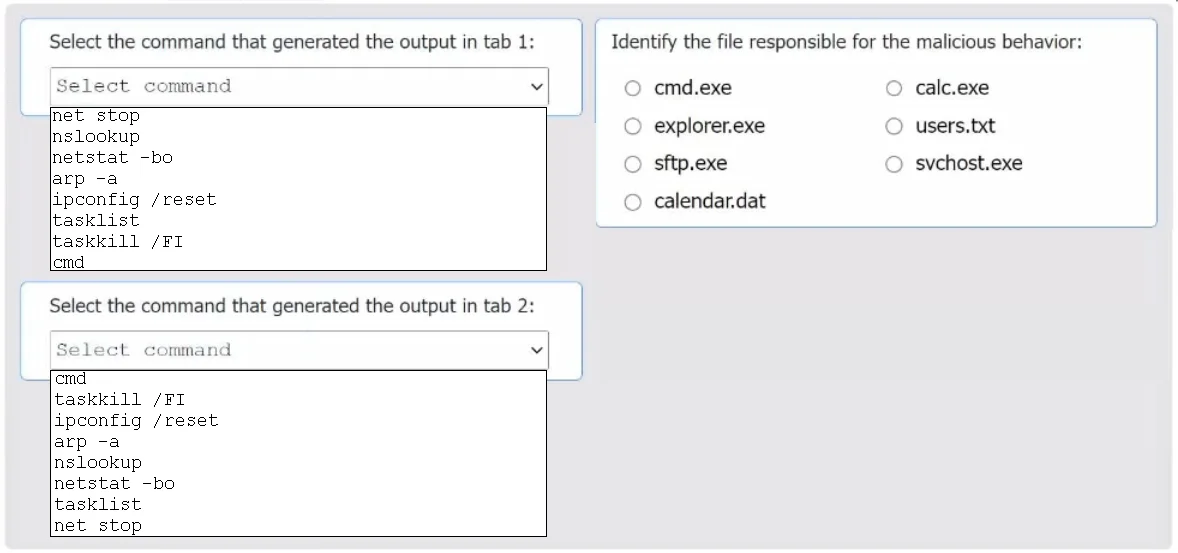
SIMULATION An organization has noticed large amounts of data are being sent out of its network. An analyst is identifying the cause of the data exfiltration. INSTRUCTIONS Select the command that…
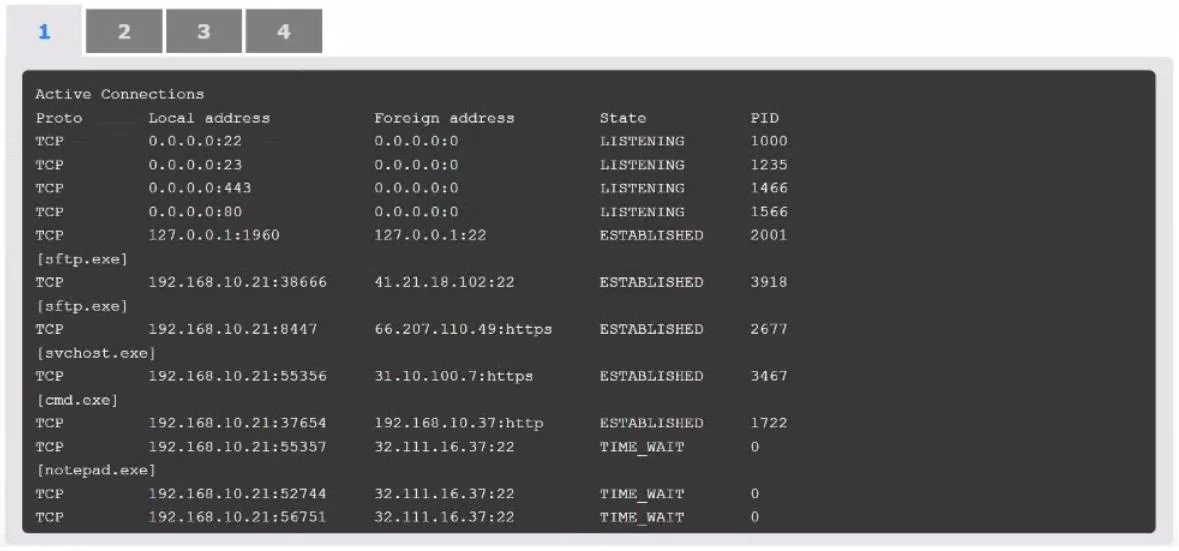
The command 'netstat -bo' is correct for Tab 1 because it displays active network connections along with the owning process (the '-b' flag shows the executable involved in each connection, and '-o' shows the PID), making it the ideal tool for identifying suspicious outbound…
Question
Exhibits
Explanation
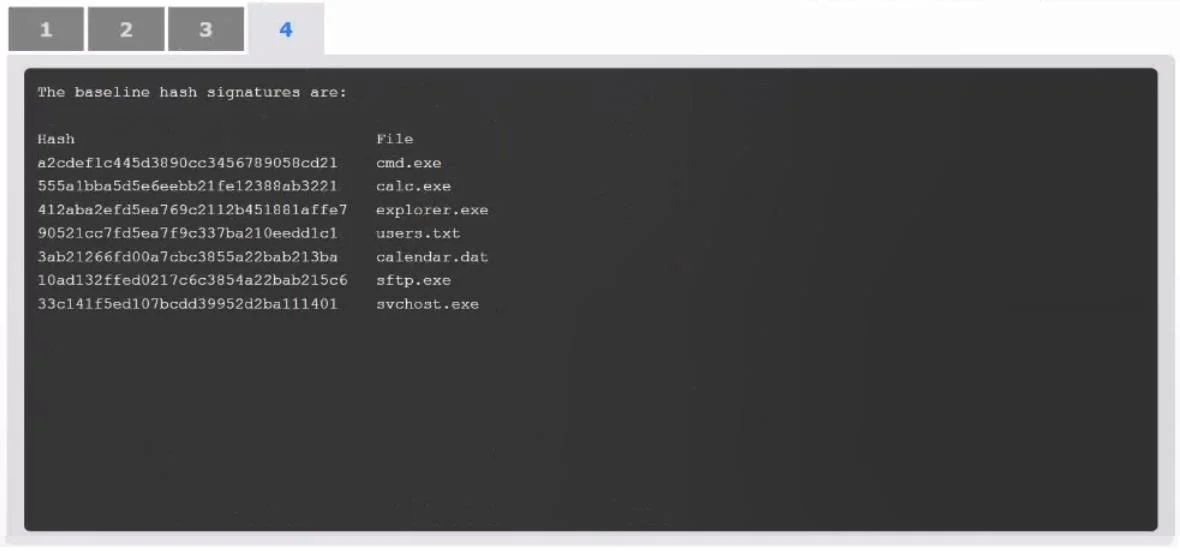
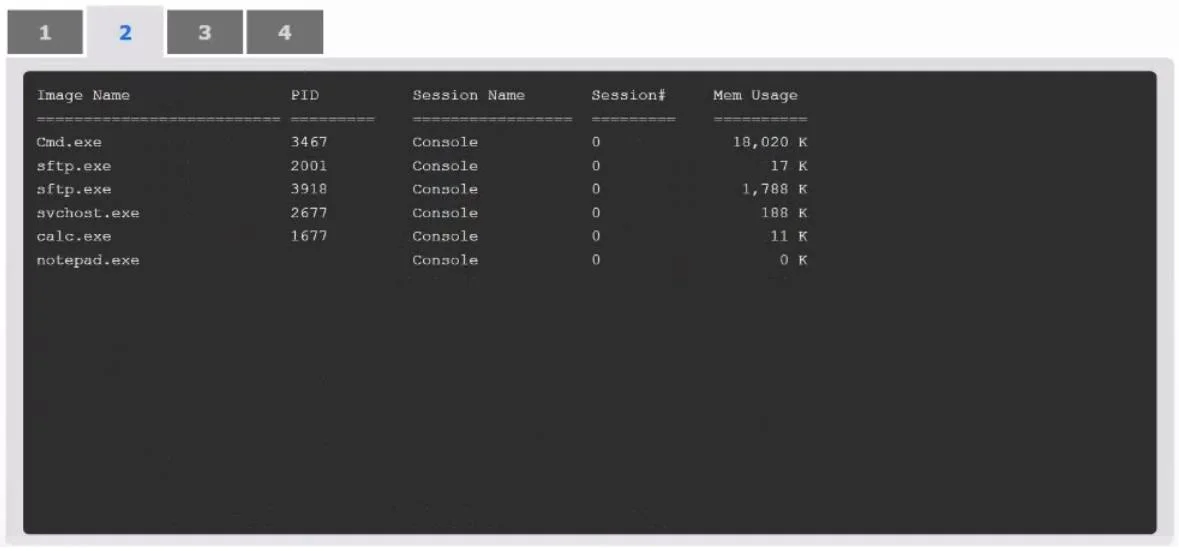
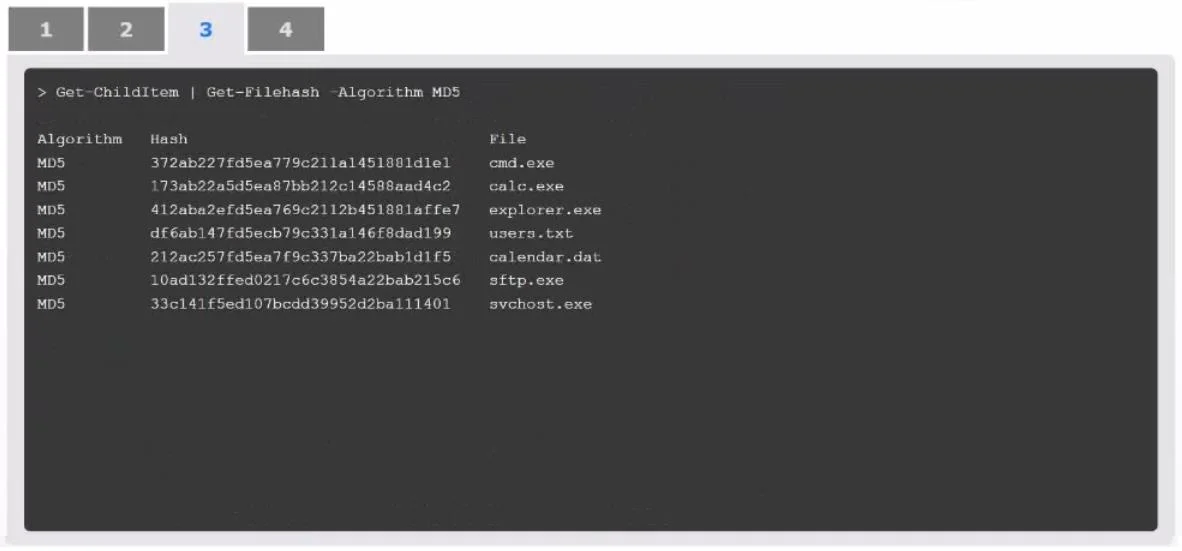
The command 'netstat -bo' is correct for Tab 1 because it displays active network connections along with the owning process (the '-b' flag shows the executable involved in each connection, and '-o' shows the PID), making it the ideal tool for identifying suspicious outbound connections. The 'tasklist' command is correct for Tab 2 because it enumerates all running processes with their PIDs, session names, and memory usage, allowing an analyst to cross-reference PIDs found in the netstat output. cmd.exe is identified as the malicious file because its MD5 hash in Tab 3 does not match the known-good baseline hash in Tab 4, indicating the binary has been tampered with or replaced - a classic indicator of a trojanized system binary used for data exfiltration.
Topics
Community Discussion
No community discussion yet for this question.