
CS0-003 · Question #4
Due to reports of unauthorized activity that was occurring on the internal network, an analyst is performing a network discovery. The analyst runs an Nmap scan against a corporate network to…
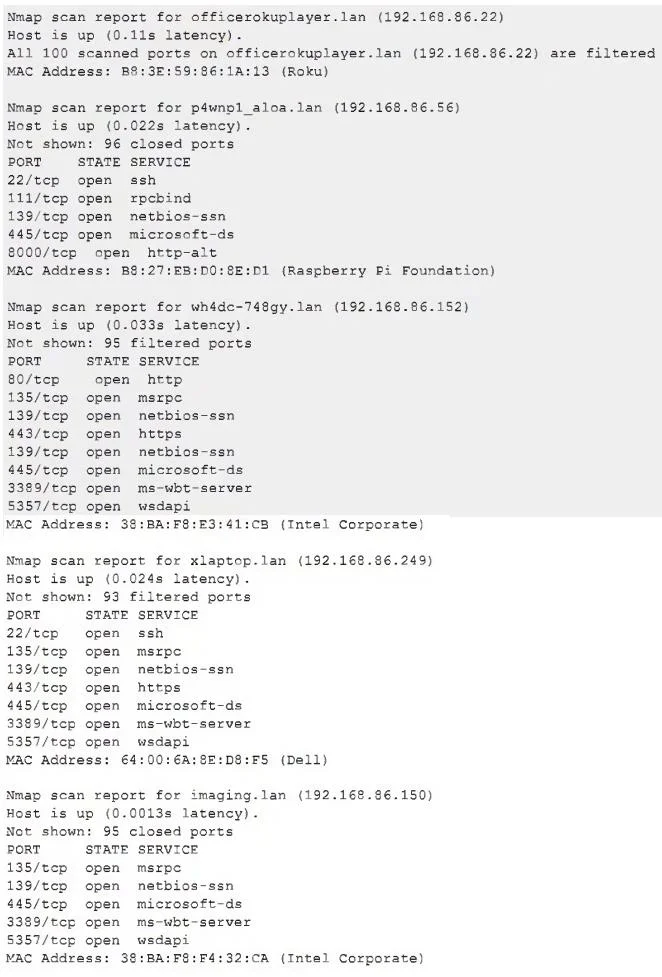
The correct answer is E. p4wnp1_aloa.lan (192.168.86.56). The analyst should look at p4wnp1_aloa.lan (192.168.86.56) first, as this is the most suspicious device on the network. P4wnP1 ALOA is a tool that can be used to create a malicious USB device that can perform various attacks, such as keystroke injection, network sniffing…
Question
Due to reports of unauthorized activity that was occurring on the internal network, an analyst is performing a network discovery. The analyst runs an Nmap scan against a corporate network to evaluate which devices were operating in the environment. Given the following output:
Which of the following choices should the analyst look at first?
Exhibit
Options
- Awh4dc-748gy.lan (192.168.86.152)
- Bofficerckuplayer.lan (192.168.86.22)
- Cimaging.lan (192.168.86.150)
- Dxlaptop.lan (192.168.86.249)
- Ep4wnp1_aloa.lan (192.168.86.56)
How the community answered
(57 responses)- A9% (5)
- B2% (1)
- C2% (1)
- D4% (2)
- E84% (48)
Explanation
The analyst should look at p4wnp1_aloa.lan (192.168.86.56) first, as this is the most suspicious device on the network. P4wnP1 ALOA is a tool that can be used to create a malicious USB device that can perform various attacks, such as keystroke injection, network sniffing, man-in-the- middle, or backdoor creation. The presence of a device with this name on the network could indicate that an attacker has plugged in a malicious USB device to a system and gained access
Topics
Community Discussion
No community discussion yet for this question.